
Pregúntele a cualquier propietario de spa qué se vende por sí solo, y las sales de baño relajantes figuran entre las primeras de la lista. Son económicas de producir, fáciles de regalar y conectan con algo a lo que la gente sigue recurriendo: veinte minutos de tranquilidad en una bañera caliente. Esa combinación ha convertido una sencilla bolsa de cristales minerales en uno de los productos de desempeño más fiable dentro del cuidado personal.
Esta guía funciona de dos maneras. Si está comprando, desglosa lo que realmente hace que un baño de inmersión valga la pena. Si está vendiendo, traza el mercado actual y muestra cómo las marcas más nuevas están logrando llegar a los estantes más rápido que antes.
Comprender las sales de baño y por qué la relajación es el segmento de mayor crecimiento
Las sales de baño son cristales minerales solubles en agua diseñados para disolverse en un baño caliente. No todas buscan la relajación. Algunas están orientadas a la exfoliación. Otras son puramente decorativas. La categoría de relajación es diferente porque vende un resultado: menor tensión, mejor sueño y músculos doloridos que dejan de quejarse.
Ese enfoque orientado a resultados es exactamente la razón por la que el segmento sigue superando al resto del pasillo de baño. La gente no compra un frasco de sal. Compra la promesa de un botón de reinicio.
Qué hace que una sal de baño sea "relajante"
El efecto relajante suele provenir de dos elementos que trabajan juntos: la base mineral y el aroma. En cuanto a la parte mineral, un baño de inmersión con sales de Epsom es el recurso principal. La sal de Epsom es sulfato de magnesio, y aunque la ciencia sobre la absorción transdérmica todavía se debate, el baño de inmersión en agua caliente por sí mismo alivia de forma confiable la tensión muscular.
Luego están las escamas de magnesio para el alivio muscular, que utilizan cloruro de magnesio y se disuelven más rápido que los cristales estándar de Epsom. Los formuladores suelen preferirlas en mezclas premium porque se sienten más sedosas en el agua y ofrecen una historia de etiquetado más limpia.
El aroma es el que realiza la mayor parte del trabajo emocional. La lavanda, la manzanilla y el sándalo son los clásicos asociados con un sistema nervioso más calmado. Una fórmula de relajación bien desarrollada combina una base mineral funcional con un aroma que transmite "es hora de relajarse" en cuanto se abre el frasco.
El panorama actual del mercado
La economía del bienestar ha seguido expandiéndose hasta 2026, y el hábito del spa en casa que se consolidó hace años nunca llegó a desaparecer realmente. Los consumidores que redujeron gastos en viajes o membresías de gimnasio siguen invirtiendo en pequeños conforts repetibles. Un frasco de sales de baño se ajusta a ese presupuesto de una manera en que un día de spa no lo hace.
La demanda de productos de baño para aliviar el estrés también está impulsada por la conversación sobre el sueño y la recuperación. El contenido sobre higiene del sueño, la cultura de los baños de agua fría y la obsesión general por la recuperación han normalizado la idea de un ritual nocturno para relajarse. Las sales de baño encajan perfectamente en esa rutina.
Quién está comprando (y vendiendo) sales de baño para la relajación
El comprador se inclina hacia mujeres de 25 a 55 años, pero los regalos amplían considerablemente ese público. Las sales de baño se venden en gran volumen durante las fiestas, el Día de la Madre y la temporada de regalos corporativos.
Por el lado de la oferta, la baja barrera de entrada atrae a muchos fundadores primerizos. Los minoristas boutique, los coaches de bienestar y los vendedores de comercio electrónico consideran los baños relajantes como un producto de entrada accesible. No se necesita un laboratorio ni un almacén para lanzarse, y eso es una gran parte de su atractivo.
Las mejores sales de baño para relajarse en este momento
En lugar de mencionar marcas que van y vienen, esta selección abarca los tipos de producto que ofrecen resultados de forma constante. Si está comprando, estos son los formatos que vale la pena probar. Si está vendiendo, estas son las categorías que vale la pena estudiar antes de crear una línea.
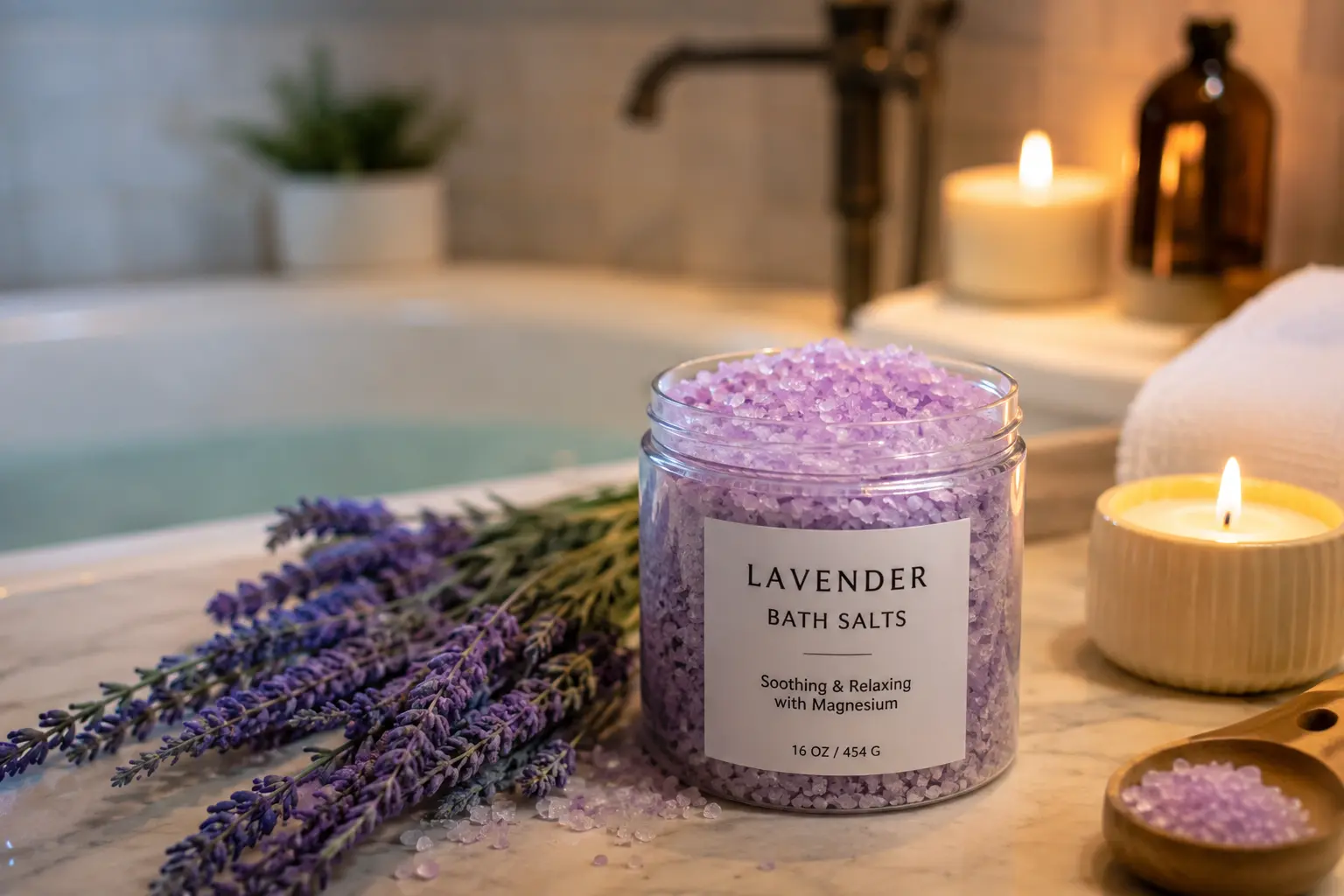
Sales de baño de aromaterapia con lavanda
La lavanda es la fragancia predeterminada para la relajación por una razón. Cuenta con décadas de confianza por parte de los consumidores, y su asociación con el sueño y la calma es casi universal. Las sales de baño de aromaterapia con lavanda rara vez necesitan explicación en el estante, lo que reduce el costo de marketing para cualquier marca que las ofrezca.
La diferencia de calidad aquí es real. Las versiones económicas dependen de aceites aromáticos sintéticos que resultan planos. Las mejores utilizan aceite esencial de lavanda, a veces mezclado con un toque de bergamota para suavizar su aspereza.
Mezclas de sales de Epsom para baño
Este es el producto de mayor volumen de ventas. Los baños con sales de Epsom son asequibles, familiares y se presentan en torno a un beneficio claro: la recuperación muscular después del ejercicio y del trabajo. Como los clientes recurren a ellos con regularidad, generan una fuerte repetición de compra, lo que importa más para los ingresos a largo plazo que cualquier venta individual.
Para los vendedores, las mezclas de Epsom son la forma más sencilla de dar a una línea de productos una base con un precio accesible, mientras que los artículos premium aportan el margen.
Escamas de magnesio para aliviar los músculos
Las escamas de cloruro de magnesio se sitúan un nivel por encima de las sales de Epsom estándar. Alcanzan un precio más alto y atraen al comprador familiarizado con el bienestar, que lee las listas de ingredientes y sigue contenido sobre recuperación. Se trata de una compra impulsada por beneficios, por lo que el empaque y los textos deben dirigirse a ese público con un poco más de precisión.
Una nota rápida para quienes adquieren estos productos: la calidad de las escamas varía mucho según el origen, y el contenido de humedad afecta tanto la textura como la vida útil. Vale la pena consultarlo con cualquier proveedor.
Baños Minerales con Sal del Mar Muerto
Pocos ingredientes tienen la reputación de lujo que poseen los minerales de sal del Mar Muerto. La alta concentración de magnesio, potasio y calcio aporta a estos baños una historia auténtica arraigada en la geografía y la tradición. Ese legado permite a las marcas posicionarse en el segmento premium sin exagerar la realidad.
Debido a que la auténtica sal del Mar Muerto cuesta más que la sal marina común, verificar el origen es importante. En esta categoría sí circulan productos falsificados y diluidos.
Mezclas Botánicas y de Aceites Esenciales
Una vez que una línea cuenta con sus opciones básicas de lavanda y sales de Epsom, las variaciones botánicas la amplían sin añadir mucha complejidad. El eucalipto transmite una sensación de frescura y energía. La manzanilla se percibe como suave y relajante. Las mezclas cítricas ofrecen una opción más luminosa que eleva el estado de ánimo.
Estas variaciones permiten a una marca ofrecer una "colección" en lugar de un solo producto, lo que fomenta cestas de compra más grandes y facilita los regalos.
Formatos Efervescentes y Combinados
Las sales no tienen por qué presentarse solas. Combinarlas con bombas de baño o vaporizadores para ducha crea paquetes listos para regalar que alcanzan un mayor valor percibido. Los formatos efervescentes añaden un momento sensorial, la efervescencia, que la sal común no puede ofrecer.
Los sets combinados suelen tener el mejor desempeño durante la temporada navideña porque resuelven la necesidad de regalar en una sola compra.
Cómo Elegir los Productos Adecuados para Almacenar o Vender
Tanto si está llenando su propia bañera como si está completando una orden de compra, los criterios de evaluación se superponen más de lo que podría pensar.
Calidad y origen de los ingredientes
Lea la etiqueta de atrás hacia adelante. Una lista de ingredientes breve y reconocible suele indicar una fórmula más limpia. Busque aceites esenciales identificados en lugar de una vaga "fragancia", y desconfíe del uso intenso de colorantes sintéticos cuando el producto afirma ser natural.
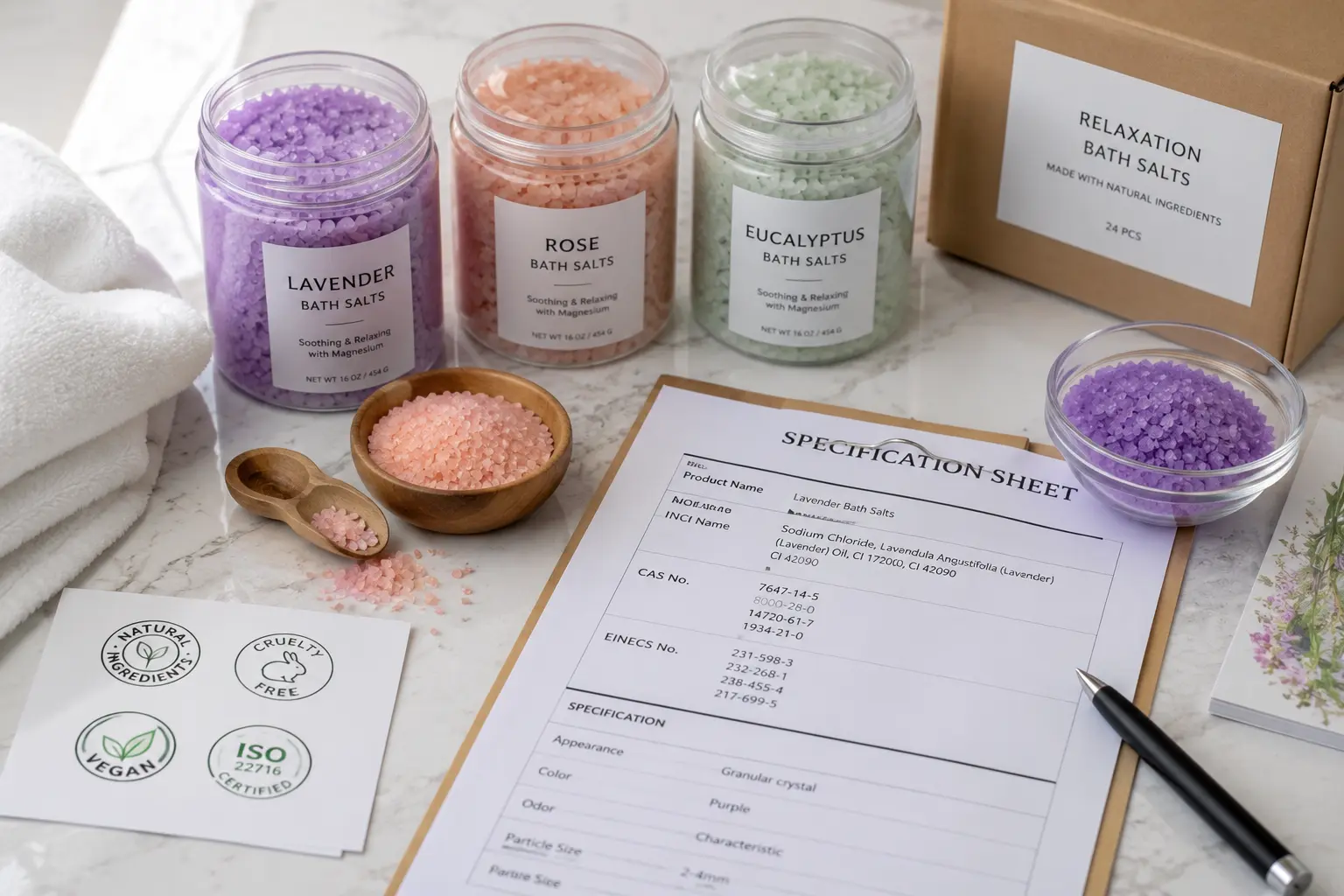
Si realiza abastecimiento a gran escala, solicite al proveedor una ficha técnica y el origen de los ingredientes. Los fabricantes de confianza las entregan sin vacilar.
Empaque, aroma y atractivo en el estante
La sal es un producto básico. La presentación no lo es. El frasco, la etiqueta y el primer impacto del aroma cuando un cliente abre la tapa hacen la mayor parte del trabajo de conversión. El empaque resellable también importa, ya que las sales absorben humedad y se apelmazan si se dejan expuestas.
Para los vendedores, aquí es donde un producto mediocre puede ganar y una gran fórmula puede perder. No lo subestime.
Certificaciones y cumplimiento normativo
Las credenciales permanecen en silencio hasta que dejan de hacerlo. Los compradores minoristas, los marketplaces y las autoridades de exportación las solicitan, y la falta de documentación puede retrasar un lanzamiento durante meses. Para cualquiera que planee vender a través de fronteras, el cumplimiento normativo no es una formalidad. Es la puerta de entrada.
¿Quiere vender sales de baño relajantes? Aquí está su camino más rápido al mercado
Todo lo anterior apunta a la misma conclusión para los vendedores aspirantes: el producto está probado, la demanda es constante y el principal obstáculo es la producción, no el interés. Ahí es donde la decisión de desarrollar frente a comprar lo cambia todo.
Por qué la marca blanca supera el desarrollo desde cero
Crear un laboratorio de formulación, abastecerse de minerales en bruto, ajustar las proporciones de fragancia y superar las pruebas de seguridad es lento y costoso. La mayoría de los fundadores primerizos subestiman cuánto tiempo se necesita para obtener un producto estable y comercializable.
La marca blanca cambia eso. Obtiene una fórmula probada, un embalaje conforme a la normativa y capacidad de fabricación desde el primer día, manteniendo al mismo tiempo el control total sobre su marca y sus márgenes. Más rápido, con menor riesgo, y le permite dedicar su energía al marketing en lugar de a la química.
Asóciese con Boymay para la fabricación OEM/ODM
Desde 1995, Boymay se ha especializado en la fabricación OEM/ODM de bombas de baño, shower steamers y productos de cuidado personal. Con una instalación de 40,000㎡, 16 líneas de producción automatizadas y certificaciones GMP, ISO, FDA y SMETA reconocidas internacionalmente, ofrecemos soluciones fiables de marca blanca y fabricación personalizada para marcas y minoristas globales.
Esa combinación de escala y documentación es lo que convierte una idea de producto en algo que realmente puede enviar, listar y exportar.
Cantidades mínimas de pedido bajas
La forma más rápida de hundir una nueva marca es pedir un inventario excesivo que no puede vender. Las cantidades mínimas de pedido flexibles y bajas le permiten probar una gama de fragancias o un concepto de embalaje sin inmovilizar su capital. Valide primero la demanda y luego amplíe los productos ganadores.
Certificaciones completas para una entrada sencilla al mercado
GMP e ISO reflejan una calidad de fabricación constante. El registro de la FDA es importante para el mercado de EE. UU., y SMETA cubre el cumplimiento ético y social que los grandes minoristas ahora auditan. Tener todo esto en regla significa que su documentación supera la aduana y las listas de verificación de los compradores en lugar de ser observada.
Fórmulas, fragancias y embalaje personalizados
La capacidad ODM significa que no está limitado a una receta genérica. Puede ajustar la base mineral, elegir entre mezclas de epsom y magnesio, desarrollar una fragancia exclusiva y diseñar un embalaje que se adapte a su marca y a su cliente objetivo. Así es como un producto de marca blanca deja de parecerse a todos los demás en el estante.
Preguntas frecuentes
P: ¿Qué ingredientes deben contener las mejores sales de baño para la relajación?
R: Busque una base mineral funcional de sal de Epsom, escamas de magnesio o minerales de sal del Mar Muerto, combinada con aromas calmantes como aceite esencial de lavanda o manzanilla. Las mejores fórmulas mantienen una lista de ingredientes corta y evitan las fragancias sintéticas intensas y los colorantes.
P: ¿Las sales de baño son productos rentables para vender?
R: Pueden serlo. Los costos de las materias primas se mantienen bajos en relación con el precio de venta al público, y los márgenes mejoran con ingredientes premium y presentaciones para regalo. El comportamiento constante de recompra en esta categoría también ayuda, ya que vender a clientes recurrentes cuesta menos que vender a nuevos.
P: ¿Cuál es el pedido mínimo para lanzar una línea de sales de baño de marca privada?
R: Depende del fabricante, pero existen opciones de MOQ bajo específicamente para que las startups puedan comenzar en pequeño. Trabajar con un socio que ofrezca mínimos flexibles le permite lanzar un lote de prueba, evaluar la demanda real y volver a pedir sus productos más vendidos en lugar de comprometerse desde el principio con una producción grande.
P: ¿Qué certificaciones necesito para vender sales de baño a nivel internacional?
R: Las certificaciones GMP e ISO indican calidad de fabricación, el registro de la FDA es un requisito esperado para el mercado de EE. UU., y SMETA cubre el cumplimiento ético y social que exigen los minoristas más grandes. Abastecerse de un fabricante que ya cuente con estas certificaciones elimina un obstáculo importante para el acceso al comercio minorista y a la exportación.
P: ¿Cuánto tiempo tarda la fabricación personalizada de sales de baño?
R: Los plazos varían según la complejidad de la fórmula y el empaque, pero los proyectos personalizados avanzan más rápido cuando se parte de una fórmula base existente en lugar de desarrollar una desde cero. El muestreo y la aprobación suelen tardar unas pocas semanas, seguidos por la producción, así que confirme los plazos de entrega con su fabricante al inicio del proceso.