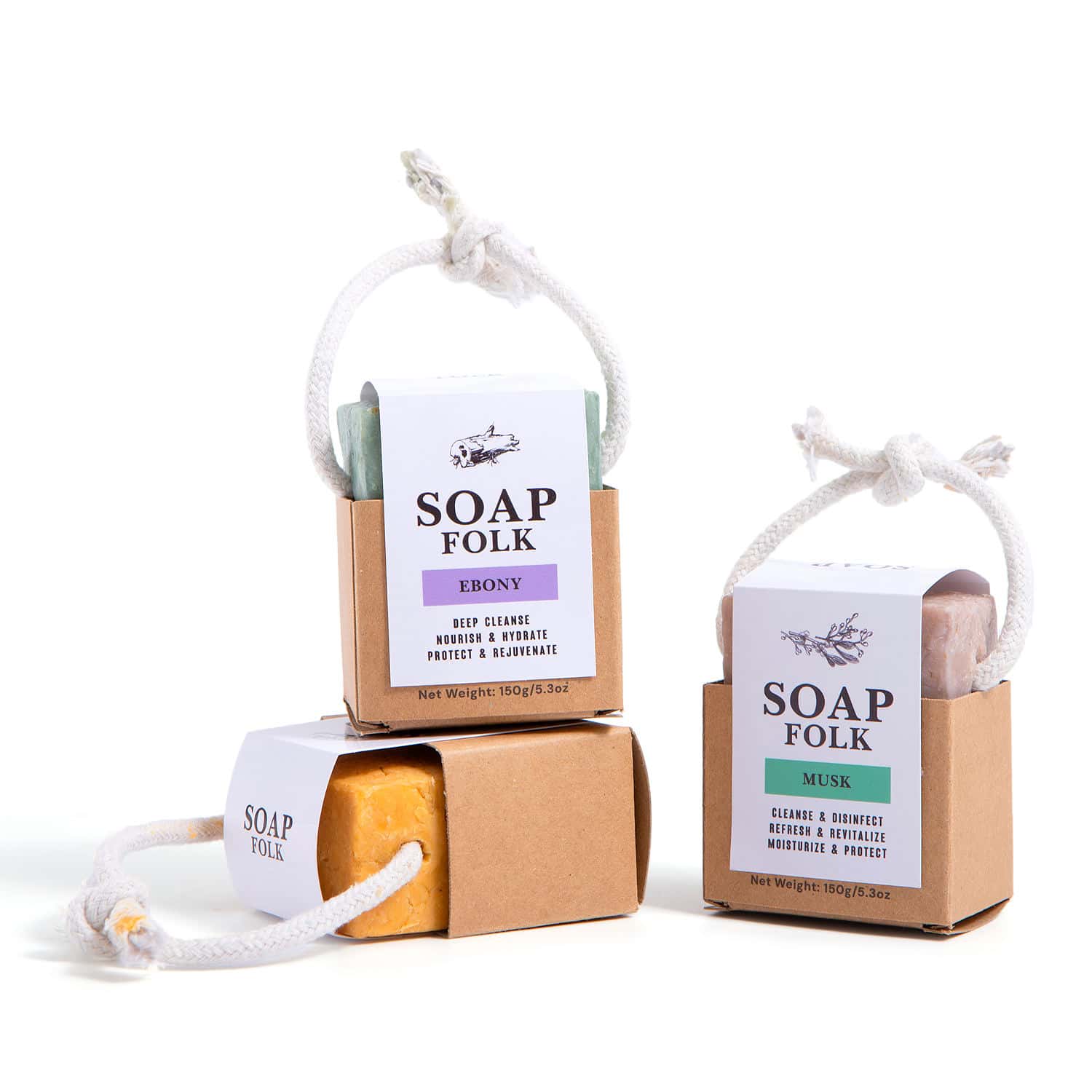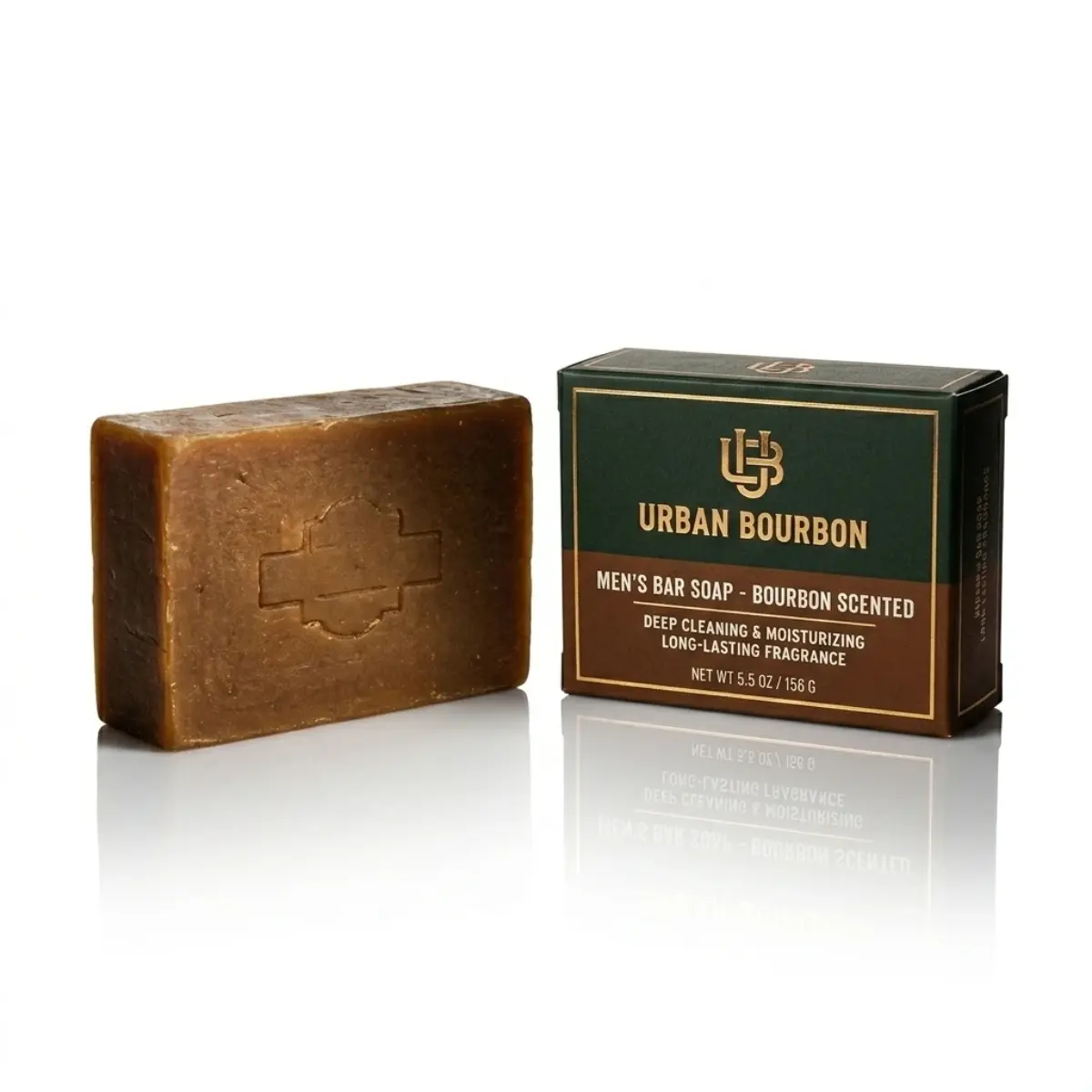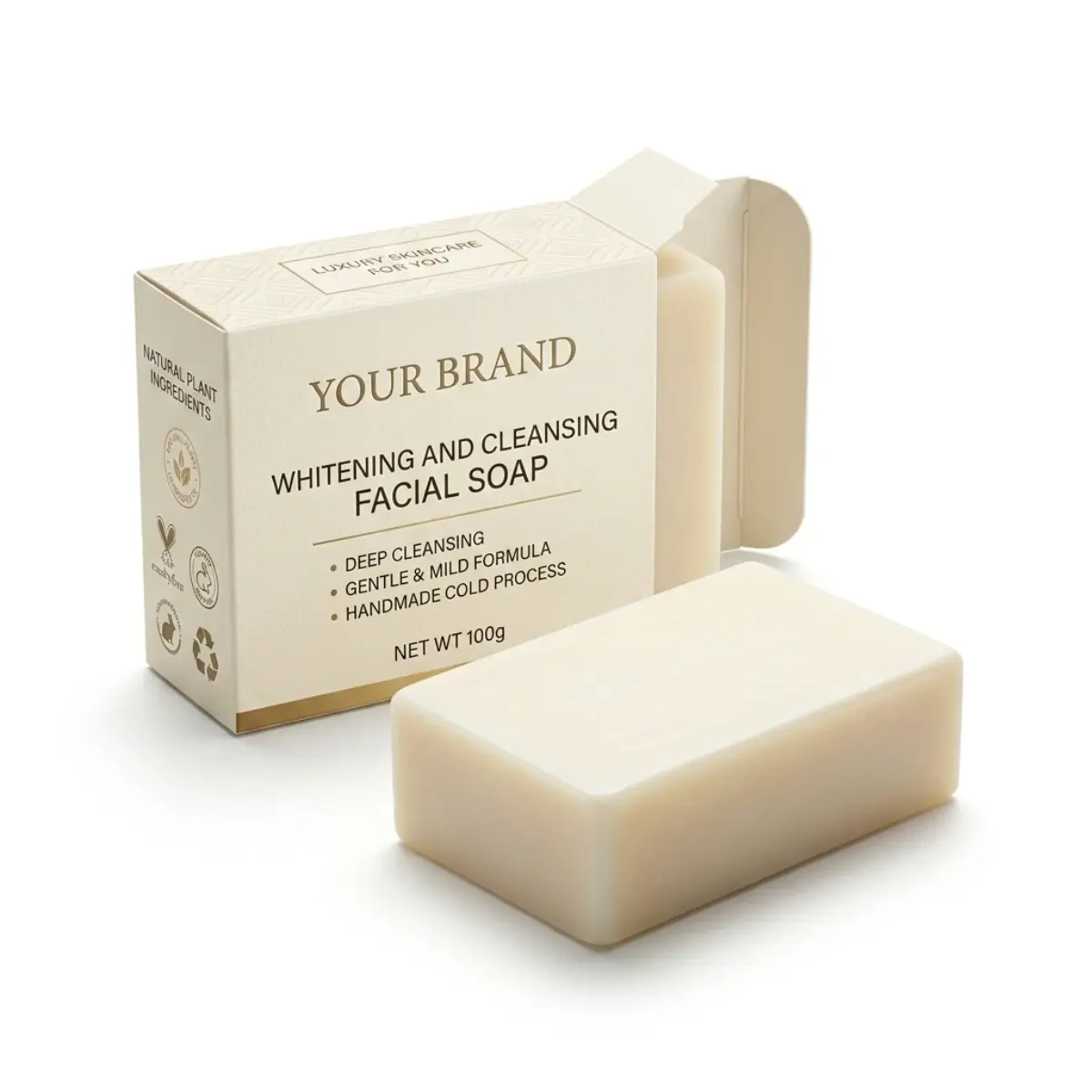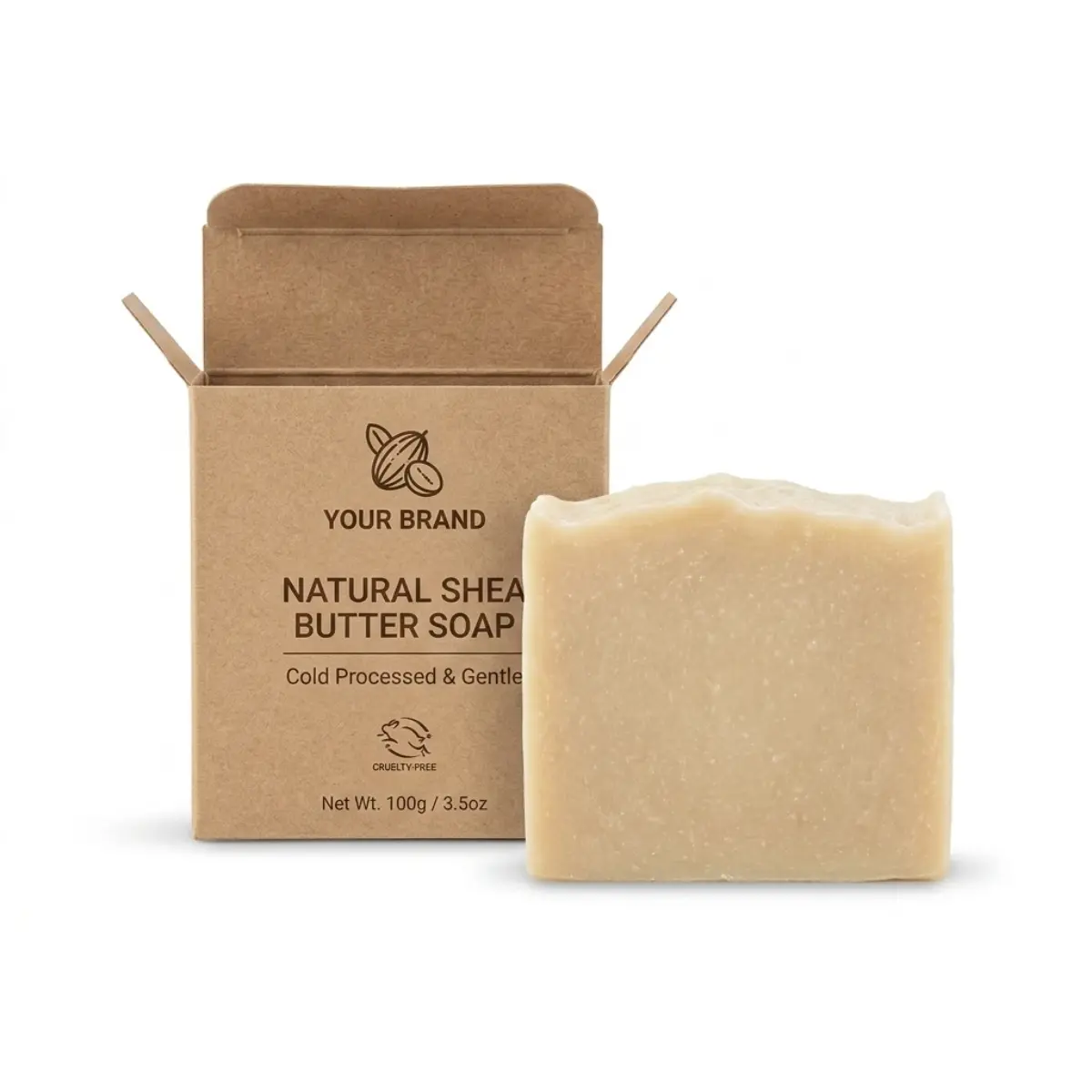

Compare el proceso en frío frente a melt and pour para jabón de marca privada. Vea los costos, los márgenes, los plazos de entrega y la mejor base de jabón para escalar su marca de manera rentable.
Imagine a un fundador de pie en un stand de feria comercial sosteniendo dos barras que parecen casi idénticas — mismo peso, mismo remolino, misma nota de lavanda. Una fue saponificada desde cero durante seis semanas; la otra se vertió a partir de una base prefabricada en una tarde. Detrás de esos dos gemelos hay estructuras de costos, plazos de entrega y márgenes de beneficio radicalmente diferentes. Entonces, ¿cuál pertenece a su línea?
Aquí tiene la versión breve antes del análisis en profundidad: melt-and-pour gana en velocidad y bajo riesgo inicial, mientras que el proceso en frío gana en margen, percepción de calidad y la historia de la etiqueta. Este artículo está escrito para propietarios de marcas de marca privada, fabricantes independientes que están escalando hacia volúmenes reales y responsables de compras que evalúan fabricantes por contrato y necesitan tomar esta decisión con conocimiento de causa.
Primero, ¿qué separa realmente a los dos métodos?
Antes de juzgar cualquier cosa, conviene ser sinceros sobre lo que realmente implica cada opción — sin adornos de marketing.
Proceso en frío (CP): saponificación a partir de aceites crudos
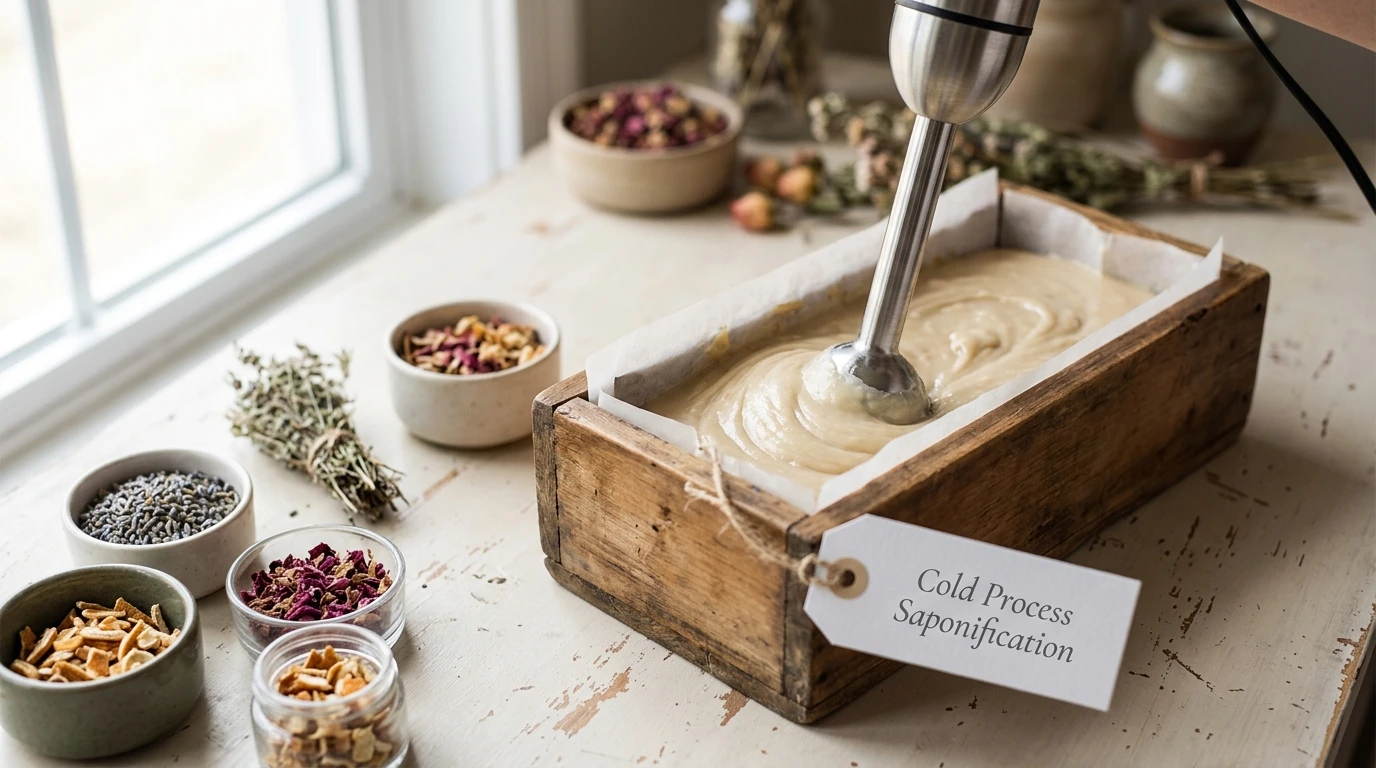
El proceso en frío es la vía clásica. El hidróxido de sodio (sosa cáustica) reacciona con una mezcla de grasas y aceites, y esa unión química — el proceso de saponificación — transforma el aceite líquido en jabón sólido sin que intervenga calor externo.
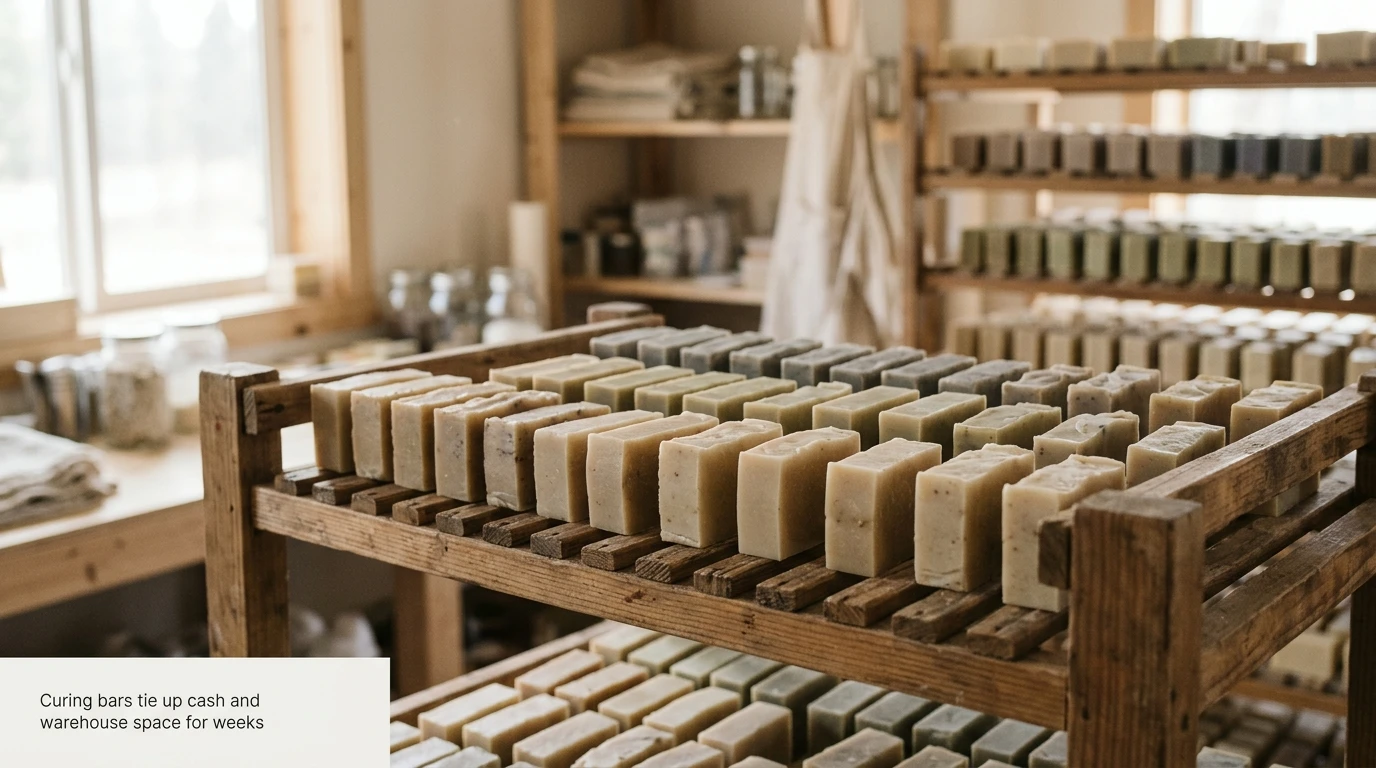
Usted controla todo: la mezcla de aceites, el porcentaje de sobreengrasado, los aditivos botánicos, los colorantes y el tiempo de curado. Ese control es precisamente el objetivo. La desventaja es la ventana de curado de 4–6 semanas, durante la cual el agua se evapora y la pastilla se endurece y se suaviza. Si se omite, se obtiene una pastilla blanda y agresiva que se disuelve en una semana.
Melt-and-Pour (M&P): trabajo a partir de una base preelaborada
El proceso melt-and-pour comienza donde termina el proceso en frío. Alguien ya ha saponificado una base de jabón personalizada para usted — glicerina, karité, leche de cabra, transparente u opaca. Usted la derrite, añade fragancia y color, la vierte en moldes y queda lista para la venta el mismo día.
Sin manipulación de sosa cáustica. Sin tiempo de curado. La contrapartida es que muchas bases comerciales incluyen tensioactivos, detergentes y humectantes añadidos para mantener su manejabilidad, lo que limita lo que puede afirmar honestamente en la etiqueta.
Los criterios de evaluación que estamos utilizando
Para mantener la imparcialidad, cada opción a continuación se evalúa con el mismo criterio:
- Costo inicial y flexibilidad de MOQ
- Velocidad de producción y tiempo de comercialización
- Control de formulación e ინგredientes
- Potencial de margen a escala de producción mayorista de jabón a granel
- Implicaciones regulatorias y de etiquetado
- Opciones de marca propia para jabón y calidad percibida
- Consistencia por lote y escalabilidad
Tabla comparativa cara a cara
| Criterios | Proceso en frío | Fundido y vertido |
|---|---|---|
| Costo inicial | Más alto (equipo, equipo de seguridad, lejía) | Más bajo (base + moldes) |
| Tiempo hasta la primera barra comercializable | 4–6 semanas (curado) | El mismo día |
| Control de ingredientes | Total | Limitado a la composición base |
| Costo unitario típico a granel | Más bajo por barra a escala | Más alto (la base incluye un recargo) |
| Reclamación de etiqueta "Natural" | Más fuerte | Depende de la base |
| Curva de aprendizaje | Empinado | Suave |
Algunas cifras realistas para contextualizar esto: en producción a volumen, el costo de la materia prima del proceso en frío suele situarse alrededor de $0.60–$1.20 por barra, según su mezcla de aceites y aditivos. Las bases de melt-and-pour, por el contrario, suelen costar $3–$6 por libra al por mayor, y ese margen se traslada a cada unidad que vende.
Proceso en Frío para Marca Privada: Fortalezas y Compensaciones
Dónde el Proceso en Frío Toma la Delantera
La mayor ventaja es una historia auténtica. El proceso en frío es uno de los verdaderos métodos de fabricación de jabón artesanal, y esa autenticidad respalda una fijación de precios premium de una forma que una base vertida rara vez puede igualar.
También obtiene una transparencia real de los ingredientes. Cuando los ingredientes de su base de jabón personalizada necesitan transmitir una promesa de etiqueta limpia — aceite de oliva, manteca de karité, aceite de coco — el proceso en frío le permite enumerar exactamente lo que se incluyó. Y una vez que supera el obstáculo del tiempo de curado, sus márgenes a largo plazo son simplemente mejores.
Los Costos Reales que Nadie Menciona
El tiempo de curado inmoviliza efectivo y espacio de almacén. Cada barra que permanece en una rejilla de curado es inventario que usted ya ha pagado, pero que no puede enviar, por lo que debe planificar lotes escalonados en lugar de un solo gran vertido.
La seguridad con la sosa cáustica, la ventilación y el personal capacitado añaden costos operativos que los principiantes subestiman. Y la variación entre lotes — los aceites se comportan de manera diferente según la temporada y el proveedor — exige un control de calidad más estricto de lo que la mayoría de los nuevos emprendedores prevé.
Ideal Para
Marcas que apuestan por un posicionamiento artesanal, de etiqueta limpia o de lujo. Empresas con suficiente capital para esperar los ciclos de curado y alcanzar volúmenes en los que el menor costo de material realmente compensa.
Fundido y vertido para marca privada: fortalezas y concesiones
Dónde M&P lleva ventaja
La velocidad es el punto principal. Puede validar una línea de productos completa — colores, fragancias, formas de molde — antes de comprometerse con equipos pesados o largos tiempos de curado.
La carga de seguridad es mínima y el costo del equipo es bajo, lo que lo hace ideal para probar nuevos SKU. Mejor aún, muchos fabricantes por contrato ofrecen MOQ bajos en producciones de marca privada de fundido y vertido, por lo que su riesgo en cualquier concepto individual se mantiene bajo.
Los costos reales que nadie menciona
Un costo unitario más alto reduce el margen a medida que escala. Lo que parece asequible con 500 unidades se convierte en una partida dolorosa con 50,000.
También pierde el control sobre la base, por lo que algunas afirmaciones "naturales" o de ingredientes minimalistas simplemente quedan fuera de discusión. Y las bases de glicerina atraen humedad — sudan en ambientes húmedos, lo que se convierte en un problema de empaque y vida útil si sus clientes viven en un lugar con mucha humedad.
Ideal para
Nuevas marcas que prueban el mercado, cajas de suscripción, sets de regalo de temporada y formas novedosas. Vendedores que valoran la rapidez de salida al mercado y el bajo riesgo inicial por encima de exprimir cada punto de margen.
Realidades regulatorias y de etiquetado que no puede omitir
Aquí es donde las buenas intenciones meten a los fundadores en problemas, así que seamos precisos.
En EE. UU., un producto comercializado solo para limpieza puede calificar como "soap" según las normas de la FDA, pero en el momento en que afirma beneficios hidratantes, antienvejecimiento u otros beneficios cosméticos, se regula como cosmético. Su método no cambia la ley, pero sus afirmaciones sí.
Desde que MoCRA — la Ley de Modernización de la Regulación de Cosméticos — entró en plena vigencia, los vendedores estadounidenses de marca blanca de jabones cosméticos generalmente necesitan el registro de la instalación y la notificación del producto. Inclúyalo en su plan de lanzamiento, independientemente del método.
El etiquetado también difiere. Con el proceso en frío, puede enumerar los aceites saponificados, lo que resulta claro y profesional. Con el proceso de fundir y verter, debe declarar la lista completa de ingredientes del fabricante de la base, incluidos los tensioactivos. Si vende en Europa, también necesitará la notificación CPNP y una evaluación de seguridad conforme.
Desglose de costos y margen a escala
Esta es la parte por la que realmente vinieron los compradores comerciales, así que aquí tiene cifras concretas para una barra estándar de 100g.
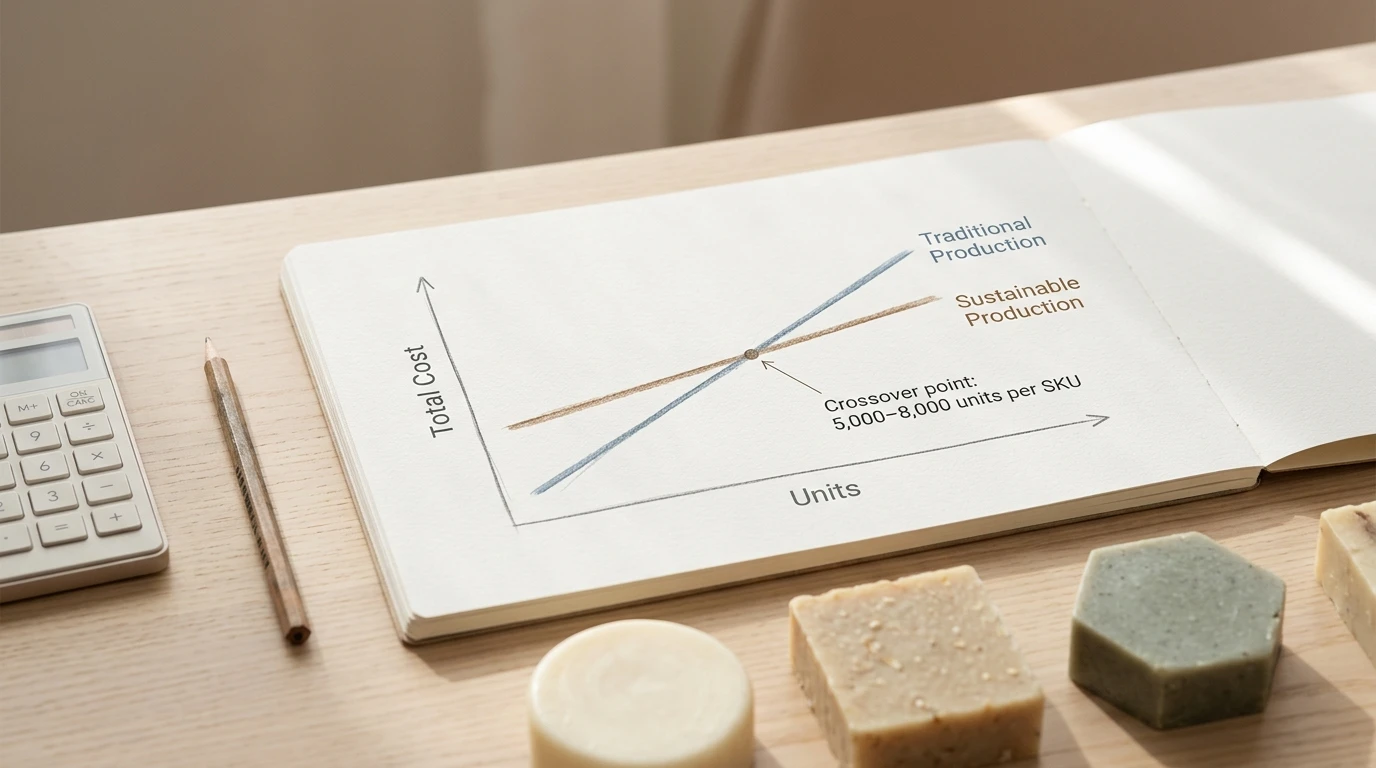
- En 1,000 unidades: M&P a menudo parece competitivo o más económico porque se evita el equipo y una configuración intensiva en mano de obra. El costo de material podría situarse cerca de $0.90–$1.30 por barra para M&P frente a $0.70–$1.10 para CP una vez que se incorpora la amortización de la configuración.
- En 10,000 unidades: la ventaja de CP en materias primas se incrementa. El costo de material por barra puede bajar hasta alrededor de $0.60, mientras que M&P sigue ligado al precio de la base, cerca de $0.85–$1.20.
El punto de equilibrio — donde el menor costo de material de CP supera su tiempo de curado y la sobrecarga de mano de obra — suele alcanzarse en algún punto del rango de 5,000–8,000 unidades para un solo SKU, aunque su mezcla de aceites y sus tarifas laborales desplazarán esa línea.
No olvide los elementos ocultos: moldes, estanterías de curado, embalaje que resista el sudor de glicerina y una tasa de deterioro o rechazo que, de forma realista, es del 2–5% en los lotes iniciales de CP.
Cómo decidir: un marco práctico de decisión
Priorice honestamente — rapidez, presupuesto, historia de marca, margen objetivo y volumen — y luego aplique la lógica simple que se muestra a continuación.
- Si necesita el producto en los estantes en 30 días → marca blanca de fundir y verter.
- Si su marca vende con "natural" y "artesanal" → marca blanca de jabón de proceso en frío.
- Si está probando cinco conceptos y espera descartar tres → M&P para el ensayo inicial.
- Si un SKU estrella está generando un volumen importante → migre a CP para proteger el margen.
Ese último punto es la ruta híbrida inteligente que muchas marcas consolidadas siguen: lanzar con melt-and-pour para validar la demanda y, después, trasladar los productos ganadores a cold process una vez que las cifras justifiquen la inversión. No es una decisión de uno u otro a lo largo de la vida de un negocio.
Nuestra recomendación
Para la mayoría de los nuevos participantes, la opción predeterminada es clara: use melt-and-pour para lanzar y validar, y luego pase a cold process para escalar y defender su margen. Es la ruta con menor arrepentimiento: aprende qué se vende antes de invertir capital en estanterías de curado y en la manipulación de sosa cáustica.
La excepción funciona al revés para las marcas cuya identidad completa es artesanal y de etiqueta limpia desde el primer día. Si sus compradores esperan una lista de ingredientes de aceites saponificados y usted ha fijado precios en consecuencia, comenzar con CP evita una reformulación brusca más adelante. Entre cold process y melt and pour, esa cuestión de encaje de marca importa más que la hoja de cálculo.
Una advertencia honesta: elija la ruta que elija, evalúe a su fabricante con los criterios anteriores. Pregunte por certificaciones, plazos reales, tiempos de envío de muestras y cómo gestionan la consistencia entre lotes. Un método excelente con un proveedor inestable sigue fallando.
¿Está listo para elegir su método de marca privada?
Desde 1995, BOMAY ha fabricado esponjas de baño, geles de ducha y productos de cuidado personal en unas instalaciones de 40,000 m² con 16 líneas automatizadas, respaldadas por certificaciones GMP, ISO, FDA y SMETA. Ofrecemos soporte OEM/ODM, moldes personalizados, formulaciones veganas y libres de crueldad, MOQ bajos desde 1,000 unidades, muestras en 7–14 días y plazos de entrega al por mayor estables de 25–30 días.
Alinee primero su método con la etapa de su negocio y luego permítanos ayudarle a validarlo: solicite muestras base, reserve una consulta de formulación o pida un presupuesto. Envíenos su mercado objetivo y sus metas de margen, y le recomendaremos la opción —y la especificación— que realmente se ajusta a su marca.
Preguntas frecuentes
P: ¿El jabón de cold process es realmente de mejor calidad que el melt-and-pour?
R: No, no automáticamente. Una barra M&P bien formulada puede superar a una barra CP apresurada y mal curada. Lo que CP ofrece de forma fiable es más control y una historia más sólida de etiqueta limpia — pero la calidad sigue dependiendo de la formulación y del control de calidad, no solo del método.
P: ¿Qué método tiene una cantidad mínima de pedido más baja para marca privada?
R: Melt-and-pour suele ganar en flexibilidad porque no hay inventario de curado que gestionar, y muchos fabricantes por contrato trabajan cómodamente con lotes pequeños. Dicho esto, las fábricas con experiencia pueden ofrecer MOQ competitivos en ambos casos — los proveedores de confianza empiezan en torno a 1.000 unidades para trabajos personalizados de marca privada.
P: ¿Puedo hacer declaraciones de etiqueta natural u orgánica con melt-and-pour?
R: Depende por completo de la base. Algunas bases premium utilizan ingredientes mínimos de origen natural que respaldan afirmaciones más suaves, pero muchas contienen tensioactivos sintéticos y humectantes que descartan la afirmación de "totalmente natural". Solicite siempre la lista completa INCI y cualquier certificación antes de hacer cualquier declaración.
P: ¿Cuánto tiempo tarda cada método desde el pedido hasta la entrega?
R: Melt-and-pour puede estar listo para muestra en unos 7–14 días y en producción a gran escala en aproximadamente 25–30 días. El proceso en frío añade además el curado de 4–6 semanas, así que planifique un plazo considerablemente más largo hasta el primer envío.
P: ¿Cuál es la mejor base de jabón para principiantes de marca privada?
R: Para los principiantes que eligen entre métodos de fabricación de jabón de marca privada, una base melt-and-pour transparente o a base de manteca de karité suele ser la mejor base de jabón para iniciar una marca privada — es tolerante, versátil y permite probar fragancias y colores sin riesgo de lejía. Pase a una fórmula personalizada de proceso en frío una vez que la demanda esté validada.