
Los shower steamers han conquistado el mundo del autocuidado. Son fáciles de usar, asequibles y convierten una ducha normal en una experiencia que se siente un poco más como un spa. Pero si tiene la piel sensible, esa pequeña tableta efervescente en el suelo de la ducha podría estar haciendo más daño que beneficio.
¿La buena noticia? No tiene que dejar de usarlos por completo. Con las elecciones adecuadas y algunos hábitos inteligentes, los shower steamers hipoalergénicos pueden formar parte de su rutina sin provocar enrojecimiento, picazón ni irritación. Veamos todo lo que necesita saber.
¿Qué son los shower steamers y cómo funcionan?
Aspectos básicos de los shower steamers
Un shower steamer es una tableta compacta — normalmente hecha de bicarbonato de sodio y ácido cítrico — que produce efervescencia cuando entra en contacto con el agua. A medida que se disuelve, libera aceites esenciales o fragancia en el vapor que llena su ducha. Usted inhala el vapor aromatizado, y de ahí proviene el beneficio de la aromaterapia.
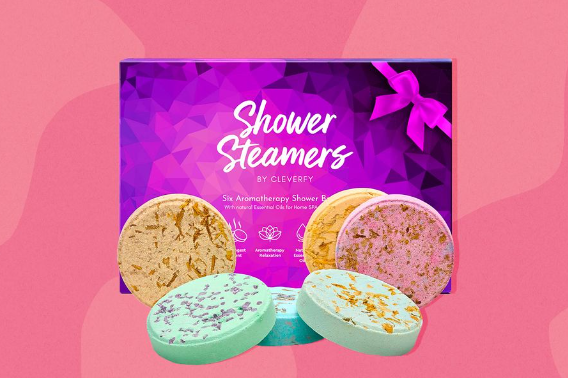
Aquí está la distinción clave que importa para la piel sensible: los shower steamers no son bath bombs. Las bath bombs se disuelven en el agua en la que usted se sumerge, lo que significa que su piel permanece en contacto directo con cada ingrediente durante un período prolongado. Los shower steamers, en cambio, están diseñados para disolverse en el suelo de la ducha o en un saliente. El contacto con la piel es indirecto — principalmente a través de residuos arrastrados por el agua que escurre.
Dicho esto, "menos contacto" no significa "ningún contacto". Y para la piel reactiva, incluso una exposición mínima al ingrediente equivocado puede causar problemas.
Por qué se han vuelto populares
No todo el mundo tiene tiempo para un baño. Ni siquiera todo el mundo tiene bañera. Los vaporizadores para ducha cubren perfectamente ese vacío — aportan la relajación de la aromaterapia a una rutina matutina de cinco minutos.
El movimiento más amplio de bienestar y autocuidado también ha impulsado la demanda. La gente quiere pequeños rituales que hagan que las rutinas diarias se sientan intencionales. Un vaporizador para ducha ofrece eso sin requerir tiempo, equipo ni esfuerzo adicionales. Solo hay que desenvolverlo, colocarlo y respirar.
Por qué la piel sensible requiere precaución adicional
Desencadenantes comunes en productos de cuidado personal
Si su piel tiende a reaccionar a productos nuevos, ya conoce a los sospechosos habituales: fragancias sintéticas, colorantes artificiales, parabenos, sulfatos y altas concentraciones de ingredientes activos. Estos son los mismos compuestos que aparecen en muchos vaporizadores para ducha convencionales.
Los aceites esenciales, aunque naturales, tampoco son automáticamente seguros. Los aceites vegetales concentrados pueden causar sensibilización con el tiempo, especialmente cuando la barrera cutánea ya está comprometida. "Natural" y "suave" no son lo mismo.
Cómo los vaporizadores para ducha pueden irritar la piel sensible
Hay tres factores que perjudican a la piel sensible durante una ducha con vapor:
El vapor abre los poros. El vapor caliente hace que los poros se dilaten, lo que aumenta la absorción de cualquier compuesto presente en la superficie de la piel. Si los residuos del vaporizador descienden por su cuerpo, la piel queda preparada para absorber más cantidad de ellos de la que absorbería a temperatura ambiente.
Los residuos se desplazan con el agua. Incluso si coloca el vaporizador lejos de su cuerpo, los ingredientes disueltos fluyen con el agua sobre su piel antes de llegar al desagüe. Es una exposición de bajo nivel, pero real.
El uso acumulado se va sumando. Usar un vaporizador una vez puede estar bien. Usar uno todos los días expone la piel a un contacto repetido de baja dosis con posibles irritantes — y la sensibilización suele desarrollarse gradualmente antes de manifestarse de repente.
| Irritante potencial | Por qué es problemático | Alternativa más segura |
|---|---|---|
| Fragancia sintética | Puede desencadenar dermatitis de contacto | Sin fragancia o aroma de origen natural |
| Colorantes artificiales | Puede causar enrojecimiento y picazón | Colorantes de origen vegetal o fórmulas sin colorantes |
| Aceites esenciales de alta concentración | Sensibilización cutánea con el tiempo | Aceites esenciales diluidos para piel sensible |
| Mentol/alcanfor | Puede quemar o irritar la piel reactiva | Aceites suaves como manzanilla o lavanda |
| Sulfatos | Dañan la barrera natural de la piel | Agentes aglutinantes sin sulfatos |
Cómo elegir shower steamers hipoalergénicos
Lo que realmente significa "hipoalergénico"
Esto es algo que la mayoría de las personas no sabe: "hipoalergénico" no tiene una definición legal regulada. Cualquier marca puede ponerlo en una etiqueta sin cumplir una norma específica. Simplemente sugiere que es menos probable que el producto cause una reacción alérgica — pero no existe un requisito universal de pruebas que respalde esa afirmación.
Entonces, ¿qué debería buscar realmente? Las pruebas realizadas por terceros son un indicador sólido. Los productos que han sido evaluados por laboratorios independientes o cuentan con avales de organizaciones dermatológicas (como el sello de la National Eczema Association) al menos han pasado por algún tipo de revisión. Los productos de ducha recomendados por dermatólogos suelen someterse a pruebas de parche en voluntarios con piel reactiva antes de obtener esa denominación.
Ingredientes clave que debe buscar
Al comprar bombas de ducha suaves, las listas de ingredientes más cortas son su mejor opción. Cuantos menos componentes tenga una fórmula, más fácil será identificar qué está causando una reacción, si llega a producirse.
Busque estas señales positivas:
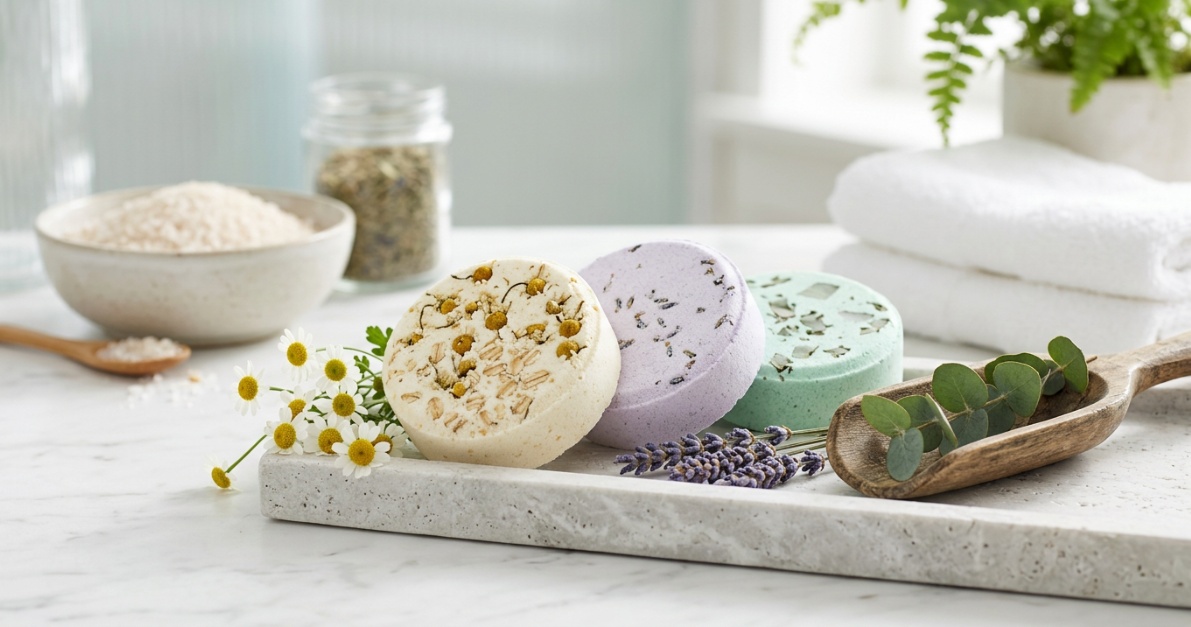
- Aceites esenciales suaves para piel sensible — lavanda, manzanilla e incienso son bien tolerados por la mayoría de las personas
- Aceites portadores como jojoba o aceite de almendras dulces que amortiguan la concentración del aceite esencial
- Opciones de aromaterapia sin fragancia que se basan en un único ingrediente botánico de baja dosis en lugar de mezclas complejas de fragancias
- Bases simples de bicarbonato de sodio y ácido cítrico sin aditivos innecesarios
Señales de alerta en la etiqueta
Tenga precaución cuando vea:
- La palabra "natural" sin ninguna certificación ni divulgación específica de ingredientes — es un término de marketing, no una garantía de seguridad
- Listas de ingredientes con más de 20 compuestos, especialmente aquellos que son difíciles de pronunciar o buscar
- Ninguna divulgación de alérgenos en absoluto — las marcas reputadas para piel sensible incluirán de forma proactiva los alérgenos comunes
- Términos vagos como "mezcla propietaria" que ocultan lo que realmente contiene el producto
Los mejores aceites esenciales para piel sensible en pastillas de vapor para ducha
Aceites generalmente considerados seguros
No todos los aceites esenciales presentan el mismo perfil de riesgo. Algunos tienen un largo historial de buena tolerancia, incluso en personas con piel reactiva:
Lavanda es el estándar de referencia — antiinflamatoria, calmante y ampliamente tolerada. Es el punto de partida más seguro para cualquier persona nueva en la aromaterapia con piel sensible.
Manzanilla romana es otra excelente opción. Es conocida por sus propiedades calmantes y es lo suficientemente suave para su uso en productos diseñados para bebés y niños.
Incienso tiene un aroma cálido y reconfortante, y se considera de bajo riesgo de sensibilización. Combina bien con otros aceites suaves.
Sándalo es suave, amaderado y rara vez causa reacciones cutáneas adversas cuando se diluye adecuadamente.
Aceites que se deben evitar o usar con precaución
Se sabe que algunos aceites esenciales sensibilizan la piel. Incluso en un shower steamer — donde el contacto es indirecto — estos pueden causar problemas en la piel reactiva:
Canela en corteza es uno de los irritantes más comunes entre los aceites esenciales. Puede causar ardor, enrojecimiento y dermatitis de contacto incluso en bajas concentraciones.
Menta piperita en dosis altas crea una sensación refrescante que se convierte en ardor en la piel sensible. Las concentraciones bajas pueden ser tolerables, pero es una apuesta arriesgada.
Hierba de limón y clavo son igualmente agresivos — ambos tienen un alto potencial de sensibilización cutánea con la exposición repetida.
| Aceite esencial | Nivel de riesgo de sensibilidad | Notas |
|---|---|---|
| Lavanda | Bajo | Ampliamente tolerado; propiedades calmantes |
| Manzanilla romana | Bajo | Antiinflamatorio; bueno para la piel reactiva |
| Incienso | Bajo | Aroma relajante; rara vez causa irritación |
| Eucalipto | Moderado | Usar solo en baja concentración |
| Tea Tree | Moderado | Beneficioso, pero puede irritar en dosis altas |
| Menta piperita | Moderado–Alto | Puede causar una sensación de quemadura por frío en pieles sensibles |
| Corteza de canela | Alto | Sensibilizante cutáneo conocido; evitar el contacto directo |
| Clavo | Alto | Fuerte potencial irritante con el uso repetido |
Cómo usar shower steamers de forma segura con piel sensible
Consejos de colocación para minimizar el contacto con la piel
Dónde coloque el steamer importa más de lo que podría pensar. El objetivo es maximizar el beneficio aromático mientras se minimiza cuánto producto disuelto toca realmente su piel.
- Colóquelo lejos del chorro de agua directo que golpea su cuerpo. Una esquina del suelo de la ducha funciona, o mejor aún, una pequeña repisa o saliente cerca del cabezal de la ducha donde el vapor lo active sin que el agua arrastre residuos directamente sobre usted.
- Use una bolsa de malla o un plato pequeño. Esto ralentiza la disolución, le da más control sobre la velocidad de liberación y evita que residuos concentrados se acumulen en superficies que sus pies tocan.
- Manténgalo en el extremo del desagüe de la ducha. El agua fluye cuesta abajo — colocar el steamer cerca del desagüe significa que los residuos salen más rápido en lugar de desplazarse por el suelo de la ducha hacia usted.
Prueba de parche e introducción gradual
Antes de comprometerse con una nueva marca de shower steamers, haga una sencilla prueba de parche. Disuelva un pequeño trozo en agua tibia, aplique la solución en la parte interna del antebrazo y espere 24 horas. Si no observa enrojecimiento, picazón ni bultos, probablemente no haya problema.
Incluso después de una prueba de parche exitosa, introduzca los steamers gradualmente. Comience con un uso por semana y observe su piel durante varios días. La sensibilización no siempre aparece de inmediato — puede acumularse tras múltiples exposiciones antes de manifestarse como una reacción.
Suspenda su uso inmediatamente si nota:
- Enrojecimiento o urticaria en la piel que estuvo en contacto con el agua
- Picazón que persiste después de la ducha
- Cualquier cambio en la respiración, opresión o tos (esto indica una sensibilidad respiratoria a los compuestos aerosolizados)
Cuidados posteriores a la ducha para la piel reactiva
Después de usar una pastilla de vapor para la ducha, tome algunas medidas adicionales para proteger la barrera cutánea:
Enjuáguese bien. Permanezca 30 segundos adicionales bajo agua limpia al final de la ducha para eliminar cualquier residuo persistente.
Aplique una crema hidratante reparadora de la barrera cutánea. Busque ceramidas, ácido hialurónico o avena coloidal — estos ayudan a reforzar la barrera cutánea frente a posibles irritantes a los que pueda haber estado expuesto.
Evite aplicar otros productos con fragancia. En los días en que use una pastilla de vapor para la ducha, omita la loción corporal perfumada, el perfume o la loción para después del afeitado. Múltiples exposiciones a fragancias en la misma sesión aumentan el riesgo general de irritación.
Consejos de dermatólogos sobre bombas de ducha suaves
Lo que recomiendan los expertos en piel
Los dermatólogos que trabajan con pacientes propensos al eccema y con piel sensible suelen ofrecer orientación constante en lo que respecta a las pastillas de vapor para la ducha:
- Opte por productos con menos de 10 ingredientes. Las fórmulas más simples implican menos desencadenantes potenciales y facilitan la identificación de la causa si se produce una reacción.
- Elija productos probados específicamente en piel sensible o con tendencia al eccema. Esto va más allá de las afirmaciones genéricas de "probado por dermatólogos" — busque marcas que especifiquen la población en la que realizaron las pruebas.
- Busque certificaciones relevantes. El sello de aceptación de la National Eczema Association, la certificación cruelty-free y las certificaciones de ingredientes orgánicos indican un mayor nivel de control del producto.
Cuándo evitar por completo los shower steamers
Hay ocasiones en las que incluso el shower steamer más suave no merece el riesgo:
- Brotes activos de eccema o psoriasis. Cuando la barrera cutánea ya está comprometida, cualquier exposición adicional a posibles irritantes puede empeorar significativamente la inflamación.
- Heridas abiertas o piel recién afeitada. Los microcortes del afeitado crean vías directas para que los irritantes penetren en la piel. Espere al menos 12 horas después de afeitarse antes de usar un steamer.
- Sensibilidades respiratorias conocidas. Si tiene asma o reacciona a las fragancias aerosolizadas, el vapor que transporta compuestos de aceites esenciales hacia las vías respiratorias puede desencadenar dificultades para respirar — incluso si su piel tolera bien el producto.
Preguntas frecuentes
¿Son los shower steamers más seguros que las bath bombs para la piel sensible?
En general, sí. Dado que los shower steamers se disuelven en el suelo o en una repisa en lugar de hacerlo en el agua en la que se está remojando, su piel tiene mucho menos contacto directo con los ingredientes. Sin embargo, no están completamente exentos de riesgo. El agua de escorrentía sigue arrastrando producto disuelto sobre la piel, y el vapor puede llevar compuestos a los poros abiertos. Menor exposición es mejor que mayor exposición, pero no es cero.
¿Los shower steamers sin fragancia aún pueden ofrecer beneficios de aromaterapia?
Sí. Existen opciones de aromaterapia sin fragancia. Algunas marcas utilizan aceites esenciales de una sola nota en concentraciones extremadamente bajas — lo justo para producir un aroma sutil en el vapor sin considerarse "perfumado" en el sentido tradicional. Otras se centran en el aspecto ritual y de relajación de la propia experiencia, que aporta sus propios beneficios para aliviar el estrés independientemente del aroma.
¿Cómo sé si un shower steamer causó mi reacción cutánea?
Utilice el método de eliminación. Deje de usar el steamer y observe si sus síntomas desaparecen en unos pocos días. Si es así, vuelva a introducirlo una vez después de una semana y controle de cerca la reacción. Si reaparece, ya tiene la respuesta. En caso de reacciones persistentes o graves, consulte a un dermatólogo, quien puede realizar pruebas epicutáneas profesionales para identificar el alérgeno exacto.
¿Los shower steamers caseros son mejores para la piel sensible?
Pueden serlo, porque usted controla exactamente qué contienen. Puede usar ingredientes mínimos, elegir aceites esenciales específicos para piel sensible en niveles de dilución seguros y omitir por completo colorantes y fragancias sintéticas. Sin embargo, el riesgo está en los errores de formulación — demasiado aceite esencial, mezcla inadecuada o contaminación durante la preparación. Si opta por la vía casera, siga recetas probadas de fuentes confiables y mida con precisión.
¿Con qué frecuencia puede una persona con piel sensible usar shower steamers de forma segura?
La mayoría de los dermatólogos sugieren limitar su uso a una a tres veces por semana, según su tolerancia individual. El uso diario aumenta la exposición acumulativa y eleva el riesgo de desarrollar sensibilización con el tiempo — incluso a ingredientes que su piel toleró inicialmente. Comience poco a poco, controle cuidadosamente y solo aumente la frecuencia si su piel permanece completamente calmada.
Conclusiones finales
La piel sensible no tiene por qué significar renunciar a los pequeños placeres de una ducha humeante y aromática. La clave está en ser intencional con lo que elige y con la forma en que lo usa.
Priorice la transparencia de los ingredientes. Busque listas de ingredientes breves, certificaciones significativas y marcas que formulen específicamente shower steamers hipoalergénicos para piel reactiva. Elija aceites esenciales suaves como lavanda y manzanilla en lugar de otros agresivos como canela y clavo. Coloque su steamer estratégicamente para minimizar el contacto con la piel y siempre enjuáguese bien después.
Lo más importante es escuchar a su piel. Empiece poco a poco, haga una prueba de parche con los productos nuevos y no insista pese a la irritación porque un producto se comercialice como "suave" o "natural". La respuesta de su piel es la única opinión que importa.
Con las precauciones adecuadas, las bombas de ducha suaves pueden formar parte perfectamente de una rutina de autocuidado segura y placentera — sin necesidad de bañera.