
Deje caer una bomba de baño en agua tibia y obtendrá un espectáculo instantáneo — colores arremolinados, burbujas efervescentes y un aroma que llena todo el baño. Parece algo que siempre ha existido. Pero alguien tuvo que imaginarlo primero. Y esa persona estaba trabajando desde su cocina con bicarbonato de sodio, ácido cítrico y muchísima curiosidad.
Esta es la verdadera historia de cómo las bombas de baño pasaron de ser un experimento casero a una obsesión global.
Un experimento de cocina que cambió la hora del baño para siempre
Antes de mediados de la década de 1980, sus opciones para la hora del baño eran bastante limitadas. Tenía líquido para baño de burbujas, quizá algunas sales, posiblemente un aceite si quería algo más sofisticado. ¿La idea de una esfera sólida y efervescente que se disolviera en color y fragancia? Eso aún no existía.
Mo Constantine cambió eso. Trabajando desde su casa en Dorset, Inglaterra, comenzó a experimentar con la combinación de bicarbonato de sodio y ácido cítrico — dos ingredientes que reaccionan de forma espectacular al entrar en contacto con el agua. No era una química de formación. Era una inventora autodidacta de cosméticos a la que le gustaba hacer las cosas a mano y que se preguntaba qué pasaría si compactaba esos ingredientes efervescentes en una forma sólida.
Según se informa, la inspiración surgió al ver cómo se disolvían las tabletas de Alka-Seltzer. Esa reacción efervescente — el rápido burbujeo, la forma en que la tableta parecía cobrar vida en el agua — le hizo pensar: ¿y si pudiera convertir eso en algo placentero? ¿Algo que oliera de maravilla, diera color al baño e hiciera que toda la experiencia se sintiera como un capricho en lugar de una rutina?
Esa pregunta de "¿y si...?" dio origen a toda una categoría de producto.
¿Quién es Mo Constantine?
Mo Constantine (nacida como Mo Mayfield) es la persona ampliamente reconocida como la inventora de la bomba de baño. Nunca recibió formación formal en cosmética. En cambio, aprendió por sí misma sobre formulación mediante la lectura, la experimentación y una buena dosis de ensayo y error en su propia cocina.
Su filosofía fue clara desde el principio: usar ingredientes naturales, hacer todo a mano y crear productos que involucraran los sentidos. No le interesaban las fórmulas producidas en masa y cargadas de químicos. Quería cosas que se sintieran personales y llenas de vida.
Los primeros experimentos tuvieron lugar en su garaje y su cocina. Mezclaba lotes de ingredientes, los prensaba en moldes, los probaba en su propia bañera, ajustaba las proporciones y lo intentaba de nuevo. Las primeras bombas de baño eran rudimentarias — formas imperfectas, efervescencia irregular y, a veces, se desmoronaban incluso antes de tocar el agua. Pero la idea central funcionó. Una esfera sólida que estallaba en color y aroma en el momento en que tocaba el agua caliente era realmente novedosa, y la gente se dio cuenta.
El esposo de Mo, Mark Constantine, era su compañero tanto en la vida como en los negocios. Él se ocupaba más de la parte comercial y de marca, mientras Mo se centraba en el desarrollo de productos. Juntos, construyeron algo que comenzó siendo pequeño y creció mucho más allá de lo que probablemente cualquiera de los dos imaginó.
Del experimento efervescente a un fenómeno global
El camino desde un experimento en la cocina hasta el éxito comercial no fue en línea recta. Mo y Mark primero vendieron sus bombas de baño artesanales y otros cosméticos en puestos de mercado y a través de pequeñas tiendas independientes. Formaban parte de una ola de personas en el Reino Unido que elaboraban productos de belleza naturales y hechos a mano durante la década de 1980.
En 1988, lanzaron una empresa de venta por correo. Logró crear una base fiel de seguidores — a la gente le encantaban los productos originales y la filosofía artesanal — pero la empresa finalmente tuvo problemas financieros y cerró en 1994.
Ese no fue el final. En 1995, Mo y Mark, junto con varios colegas, abrieron su primera tienda minorista en Poole, Dorset. La bomba de baño fue uno de sus productos emblemáticos desde el primer día. Llamaba la atención, era diferente y ofrecía a los clientes algo que no podían conseguir en ningún otro lugar.
El negocio creció de manera constante durante finales de la década de 1990 y los años 2000. Pero la verdadera explosión llegó más tarde, cuando las redes sociales entraron en escena.
Por qué las bombas de baño despegaron como lo hicieron
Las bombas de baño son intrínsecamente visuales. Deje caer una en el agua y obtendrá un pequeño espectáculo de luces — colores que se expanden y se arremolinan, efervescencia que brota, purpurina que atrapa la luz. Eso las hace perfectas para contenido en video. Cuando Instagram y YouTube despegaron, los videos de bombas de baño se convirtieron en un género propio. La gente filmaba sus bombas de baño disolviéndose en cámara lenta, compartía sus favoritas y comparaba colores y aromas.
Las empresas de cosméticos artesanales se beneficiaron enormemente de esto. Productos que ya estaban diseñados para ser visualmente espectaculares de repente eran compartidos por millones de personas de forma gratuita. Pero la tendencia también abrió la puerta a innumerables productores independientes. Tiendas de Etsy, productores de pequeños lotes y artesanos locales comenzaron a crear sus propias versiones — a menudo con giros creativos como joyas ocultas en el interior, formas inusuales o combinaciones de colores inesperadas.
Sin embargo, el atractivo va más allá de verse bien. Hay algo realmente satisfactorio en la experiencia sensorial. La efervescencia libera fragancia en el vapor. Los aceites esenciales y los hidratantes se dispersan en el agua. Todo el ritual de elegir una bomba de baño, desenvolverla y verla disolverse convierte un baño común en algo que se siente intencional y placentero.
El creciente interés de los consumidores por el abastecimiento ético, los ingredientes vegetarianos y el embalaje mínimo también ayudó a que la categoría prosperara. Las bombas de baño se alineaban de forma natural con las compras impulsadas por valores de una manera en que los productos de belleza corporativos producidos en masa a menudo no lo hacían.
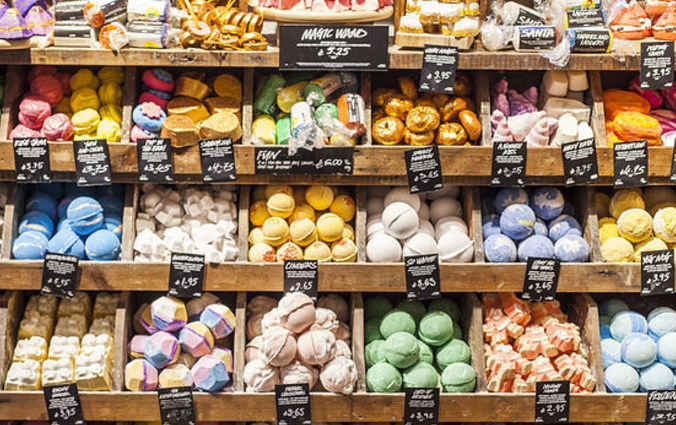
¿Qué es lo que realmente hace funcionar una bath bomb?
La ciencia es sorprendentemente simple. Una bath bomb es esencialmente una mezcla comprimida de bicarbonato de sodio (baking soda) y ácido cítrico. Cuando estos dos ingredientes secos entran en contacto con el agua, reaccionan para producir gas de dióxido de carbono — esas burbujas que ve efervescer desde la superficie.
Esa es la reacción base. Todo lo demás es adicional. Los fabricantes agregan aceites esenciales o aceites de fragancia para el aroma. Añaden colorantes (a menudo colorantes aptos para uso alimentario o pigmentos naturales) para el efecto visual. Muchas incluyen ingredientes hidratantes como manteca de cacao, aceite de coco o manteca de karité que recubren su piel a medida que la bomba se disuelve. Algunas contienen botánicos secos — pétalos de flores, hierbas o avena — para aportar textura y beneficios adicionales para la piel.
La acción efervescente tampoco es solo decorativa. Ayuda a dispersar uniformemente todos esos ingredientes añadidos en el agua del baño. La agitación del dióxido de carbono hace que los aceites y humectantes se extiendan por la superficie en lugar de quedarse en un solo punto. Y el aspecto de la aromaterapia es real — agua tibia más aceites esenciales más vapor crea un sistema eficaz de difusión del aroma que realmente puede influir en su estado de ánimo.
El mercado de las bath bombs en la actualidad
Lo que comenzó en la cocina de Mo Constantine se ha convertido en una industria global de miles de millones de dólares. El mercado de los productos de baño efervescentes se ha expandido mucho más allá de las bath bombs tradicionales. Ahora puede encontrar shower bombs (diseñadas para efervescer en el suelo de la ducha y liberar vapor de aromaterapia), bubble bars, productos relacionados con las bath bombs con CBD y ediciones limitadas de temporada que la gente colecciona como si fueran tarjetas coleccionables.
El concepto ha evolucionado de maneras que Mo probablemente nunca anticipó. Hay bath bombs con forma de planetas, donuts, cristales y personajes de dibujos animados. Hay algunas que cambian el agua a varios colores a medida que se disuelven. Hay otras comercializadas específicamente para niños, para la relajación, para la recuperación muscular y para el romance.
Pero la idea fundamental sigue siendo exactamente la que Mo creó en la década de 1980: una mezcla sólida y comprimida que hace efervescencia, colorea y perfuma el agua del baño. Todas y cada una de las bath bombs en cada estante de cada tienda remontan su origen a aquellos primeros experimentos en la cocina.
Mo Constantine recibió un MBE (Member of the Order of the British Empire) por sus servicios a la industria de la belleza — un reconocimiento de hasta qué punto su invento transformó la manera en que las personas piensan sobre algo tan simple como tomar un baño. Convirtió una rutina diaria en una experiencia, y lo hizo con ingredientes que puede comprar en cualquier tienda de comestibles.
Un detalle que vale la pena señalar: Mo nunca patentó la fórmula de la bath bomb. Esa decisión — ya haya sido intencional o no — es la razón por la que el mercado tiene el aspecto que tiene hoy. Cualquiera puede fabricar y vender bath bombs. La receta es abierta. Por eso, miles de creadores independientes ahora dirigen negocios exitosos basados en la misma química básica que Mo descubrió hace cuatro décadas.
Preguntas frecuentes
¿Quién inventó las bath bombs?
Mo Constantine inventó la bomba de baño a mediados de la década de 1980. Desarrolló el concepto mientras experimentaba con productos efervescentes para el baño en su casa de Dorset, Inglaterra, combinando bicarbonato de sodio y ácido cítrico en formas sólidas y perfumadas.
¿Cuándo se fabricó la primera bomba de baño?
Las primeras versiones se desarrollaron alrededor de 1989 durante los experimentos de Mo's en casa. Estas primeras bombas de baño efervescentes hechas a mano eran rudimentarias e imperfectas en comparación con lo que encontraría hoy en las estanterías, pero el concepto básico — una esfera sólida que burbujea y libera color y fragancia en el agua — ya estaba presente.
¿Quién fue el primero en comercializar las bombas de baño?
Mo y Mark Constantine fueron los primeros en vender bombas de baño comercialmente, inicialmente a través de un negocio de venta por correo a finales de la década de 1980 y luego en sus tiendas minoristas a partir de 1995. El producto ha sido fundamental para la identidad de su negocio desde el principio.
¿Por qué burbujean las bombas de baño?
La efervescencia es una reacción química entre el bicarbonato de sodio y el ácido cítrico. Cuando el agua activa estos dos ingredientes, reaccionan para producir gas de dióxido de carbono, que forma las burbujas que ve subir desde la superficie. Es la misma reacción básica que hace que Alka-Seltzer produzca efervescencia.
¿Se pueden hacer bombas de baño en casa?
Por supuesto. Los ingredientes básicos — bicarbonato de sodio, ácido cítrico, un aceite aglutinante y los colorantes o fragancias que prefiera — son económicos y fáciles de conseguir. Es el mismo espíritu de bricolaje con el que empezó Mo Constantine. Existen muchas recetas en línea, y el proceso es lo suficientemente sencillo para principiantes.
¿Mo Constantine patentó la bomba de baño?
No patentó la fórmula. Por eso, tantos vendedores y fabricantes independientes producen ahora libremente sus propias versiones. La naturaleza abierta de la receta ha permitido que el mercado de las bombas de baño crezca hasta convertirse en la industria enorme y diversa que es hoy.