
Dos movimientos poderosos están convergiendo en el pasillo de belleza: el resurgimiento de los ingredientes tradicionales de agua de arroz y el rápido auge de los formatos sólidos para el cuidado capilar. Juntos, han creado uno de los nichos de más rápido crecimiento en el cuidado personal—la barra de champú de agua de arroz.
Para las marcas y los minoristas que evalúan dónde invertir a continuación, esta categoría ofrece una rara combinación de narrativa auténtica, atractivo de las fórmulas limpias y una economía favorable a la logística. Este artículo analiza lo que indica la ciencia, por qué los consumidores están cambiando y cómo entrar en el mercado con el socio de fabricación adecuado.
Introducción: El auge del agua de arroz en el cuidado capilar sólido
El agua de arroz se ha utilizado durante siglos como tratamiento capilar natural, y los consumidores modernos la están redescubriendo a través de formatos prácticos y sostenibles. La barra de champú sólida elimina los envases de plástico y concentra los ingredientes activos—un formato natural para los nutrientes derivados del arroz.
El resultado es un producto que satisface simultáneamente las expectativas de belleza limpia, las exigencias de sostenibilidad y el comportamiento de compra impulsado por la eficacia. Para los responsables de la toma de decisiones B2B, esta alineación indica un impulso de categoría sólido y a largo plazo, en lugar de una moda pasajera.
¿Qué es una barra de champú de agua de arroz?
Una barra de champú de agua de arroz es un producto de limpieza sólido y concentrado formulado con extracto de agua de arroz y, a menudo, proteína de arroz hidrolizada. A diferencia de los champús líquidos, contiene poca agua añadida o ninguna, lo que la hace más ligera, compacta y libre de botellas de plástico de un solo uso.
También se diferencia de las barras de jabón tradicionales. En lugar de aceites saponificados de pH alto, las barras modernas utilizan sistemas tensioactivos suaves y equilibrados en cuanto al pH, diseñados para limpiar el cabello sin despojarlo de sus aceites naturales.
Los orígenes del agua de arroz en el cuidado capilar
La tradición se remonta a comunidades como las mujeres Yao de la aldea de Huangluo, en China, famosas por su cabello excepcionalmente largo y saludable, cuidado con agua de arroz fermentada. Rituales similares aparecen en el Japón de la era Heian, donde las mujeres de la corte utilizaban enjuagues de arroz para nutrir su cabello.
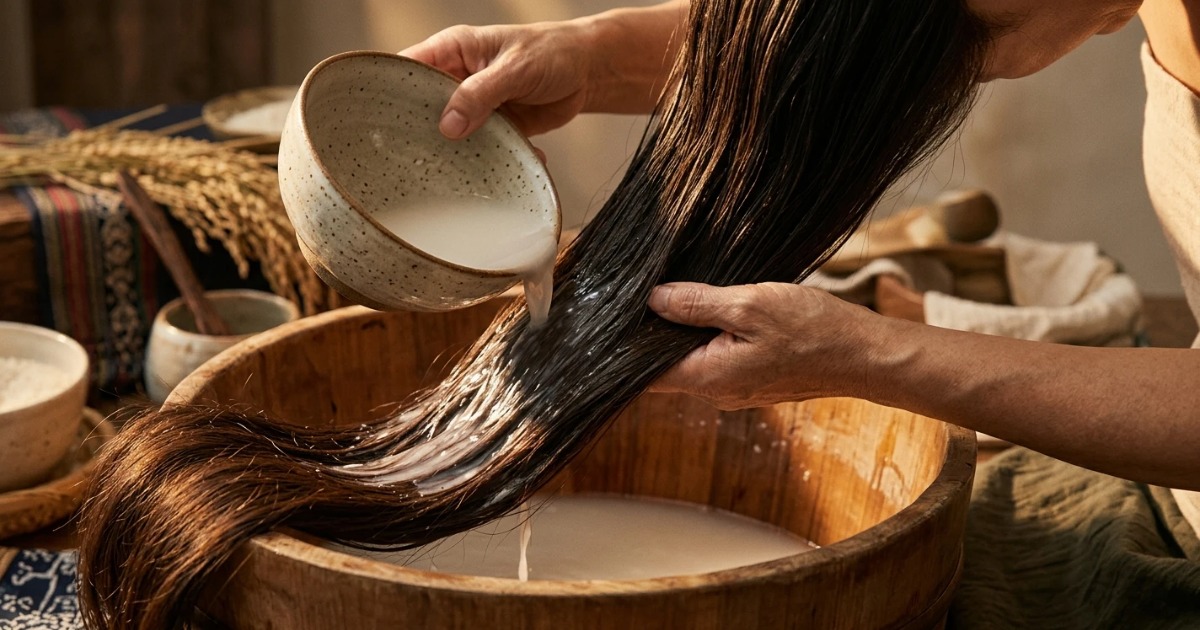
Este legado proporciona a las marcas una narrativa convincente y auténtica—un activo cada vez más valioso en un mercado saturado que recompensa la narrativa creíble.
Cómo se formulan las barras de champú de agua de arroz
El elemento central de una barra de calidad es su sistema tensioactivo, normalmente basado en limpiadores de origen vegetal sin sulfatos que se aglutinan para formar un sólido estable. El extracto de agua de arroz, al ser soluble en agua, se integra fácilmente en estas formulaciones.
Los fabricantes equilibran los activos, los agentes acondicionadores y los aglutinantes para garantizar que la barra genere una buena espuma, se enjuague limpiamente y permanezca estable durante toda su vida útil.
Extracto de agua de arroz y proteína de arroz: lo que dice la ciencia
La demanda de los consumidores está impulsada por los activos funcionales presentes en estas barras. Para los lectores profesionales que evalúan las afirmaciones sobre las formulaciones, comprender estos ingredientes es esencial.
Beneficios del agua de arroz para el crecimiento y la fuerza del cabello
El agua de arroz contiene inositol, aminoácidos y vitaminas B que favorecen la resistencia del cabello. En particular, el inositol está asociado con el fortalecimiento del tallo capilar y la reducción de la rotura.
Aunque las afirmaciones sobre el «crecimiento del cabello» siempre deben formularse con cuidado, la evidencia respalda una mayor resistencia y una reducción del daño—beneficios significativos que generan una fuerte conexión con los consumidores.
El papel de la proteína de arroz en la hidratación y el brillo
La proteína de arroz hidrolizada es un ingrediente formador de película que ayuda a retener la humedad a lo largo de la fibra capilar. Esto mejora la elasticidad, la manejabilidad y la suavidad de la cutícula.
El resultado visible es un cabello más brillante y suave, con menos puntas abiertas—un beneficio fácil de comunicar en el envase y en las acciones de marketing.
Cuidado capilar con agua de arroz fermentada: mayor biodisponibilidad
El agua de arroz fermentada es tendencia porque la fermentación puede aumentar la biodisponibilidad de nutrientes clave y reducir el pH para aproximarlo al del cabello. Esto puede mejorar la absorción y proporcionar una nutrición más profunda.
Sin embargo, los activos fermentados requieren pruebas de estabilidad exhaustivas para garantizar un rendimiento uniforme en un formato de barra sólida.
Tabla comparativa del rendimiento de los ingredientes
| Ingrediente | Función principal | Beneficio para el consumidor | Nota de formulación |
|---|---|---|---|
| Extracto de agua de arroz | Aporte de nutrientes (inositol, vitaminas B) | Cabello más fuerte y con un aspecto saludable | Soluble en agua, estable en barras sólidas |
| Proteína de arroz hidrolizada | Formación de película, retención de humedad | Brillo y menor rotura | Compatible con sistemas sin sulfatos |
| Agua de arroz fermentada | Activos de alta biodisponibilidad | Nutrición profunda | Requiere pruebas de estabilidad |
| Tensioactivos de origen vegetal | Limpieza suave | Sin sulfatos y con baja irritación | La base de las fórmulas naturales en barra |
Por qué los consumidores prefieren los productos de champú sólido
Comprender los factores que impulsan la compra es fundamental para las marcas que desarrollan una estrategia de posicionamiento. Tres factores dominan el cambio hacia los formatos sólidos.
El atractivo de la sostenibilidad y el residuo cero
Las barras sólidas eliminan las botellas de plástico, integrándose plenamente en el movimiento de productos para el cuidado capilar sin residuos. Para los compradores preocupados por el medioambiente, los envases sin plástico suelen ser un criterio de compra innegociable.
Esta propuesta de sostenibilidad es fácil de comunicar y cada vez más demandada tanto por los consumidores como por los compradores minoristas.
Rendimiento concentrado y comodidad para viajar
Una sola barra puede durar más que dos o tres botellas de champú líquido, ofreciendo una excelente relación entre coste y lavado. Su formato compacto y a prueba de derrames es apto para TSA e ideal para viajar.
Esta concentración ofrece una comodidad funcional real que va más allá del argumento de la sostenibilidad.
Demanda de fórmulas naturales y sin sulfatos
El auge de las barras de champú naturales y sin sulfatos refleja las expectativas de la belleza limpia respecto a fórmulas suaves que no eliminan los aceites naturales. Los consumidores examinan cada vez más las listas de ingredientes y valoran la transparencia.
El agua de arroz responde perfectamente a esta demanda, ya que ofrece beneficios naturales y reconocibles.
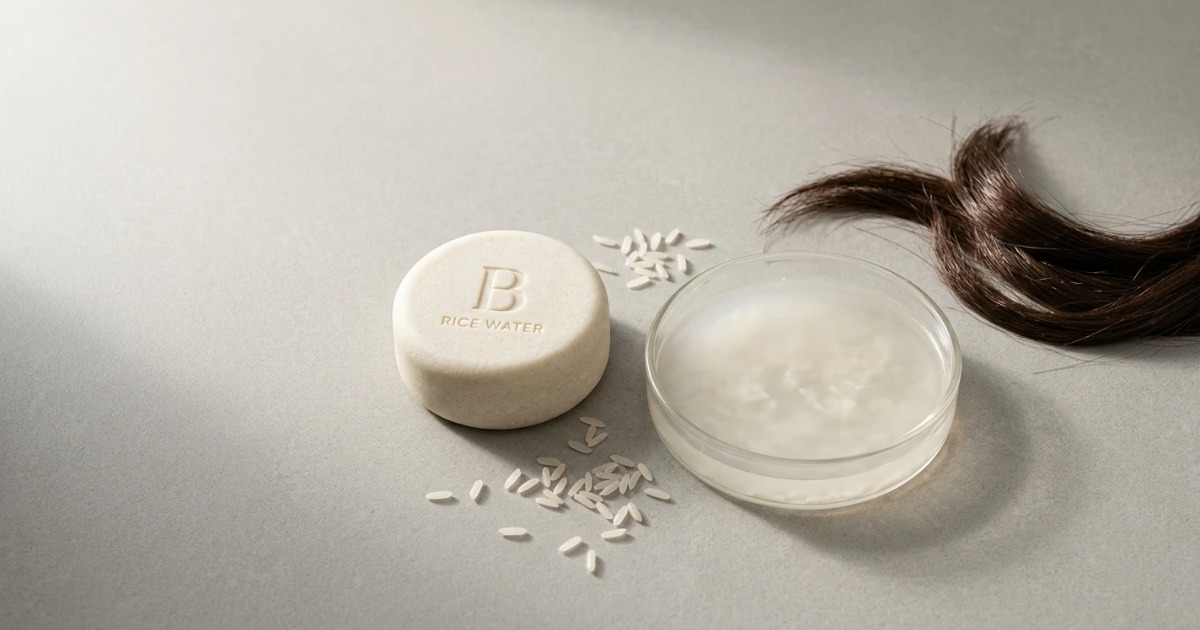
Tabla de referencia de las preferencias de los consumidores
| Factor de compra | Prioridad del consumidor* | Relevancia para las marcas |
|---|---|---|
| Envases sostenibles / sin plástico | Alta | Posicionamiento central |
| Ingredientes naturales / limpios | Alta | Enfoque de la formulación |
| Eficacia (crecimiento, brillo, fortaleza) | Alta | Afirmaciones de marketing |
| Vegano / sin crueldad animal | En crecimiento | Oportunidad de certificación |
*Datos de mercado indicativos a partir de 2026; las marcas deben citar fuentes verificadas al publicar.
Por qué las marcas están invirtiendo en la categoría de barras de champú de agua de arroz
Para los responsables de la toma de decisiones del sector, el caso comercial de esta categoría es convincente y cada vez más urgente.
Crecimiento del mercado y fuerza de las tendencias
Los segmentos del champú sólido y del cuidado natural del cabello se han expandido de forma constante hasta 2026, impulsados por la regulación en materia de sostenibilidad, la demanda de los minoristas de reducir el plástico y la preferencia de los consumidores por fórmulas limpias. El agua de arroz se encuentra en la intersección de las tendencias más relevantes.
Los primeros participantes tienen la oportunidad de establecer presencia en los estantes antes de que la categoría madure.
Diferenciación mediante ingredientes tradicionales
En un mercado saturado de barras de champú naturales, la narrativa sobre las tradiciones proporciona una diferenciación esencial. La tradición milenaria del agua de arroz ofrece una autenticidad que los activos sintéticos simplemente no pueden replicar.
Esta narrativa respalda un posicionamiento premium y una mayor fidelidad a la marca.
Ventajas de margen y logística de los formatos sólidos
Las barras sólidas son más ligeras y pequeñas, lo que reduce el peso de envío y los costos de transporte. También requieren menos material de embalaje y ofrecen una mayor presencia en los estantes durante más tiempo.
Estas eficiencias se traducen en márgenes más saludables—una propuesta atractiva tanto para las marcas como para los minoristas de marcas privadas.
Cómo elegir al fabricante adecuado de barras de champú sólidas
El éxito en esta categoría depende de seleccionar un socio fabricante competente y certificado. La relación OEM/ODM adecuada reduce los riesgos del lanzamiento y acelera el tiempo de comercialización.
Criterios clave para las asociaciones OEM/ODM
Priorice a los fabricantes que cuenten con certificaciones reconocidas, como GMP, ISO, FDA y SMETA. Igualmente importantes son la flexibilidad del MOQ, una sólida capacidad de personalización y plazos de entrega confiables.
Un socio capaz de respaldar moldes, fórmulas, fragancias y embalajes personalizados permite una verdadera diferenciación de marca.
Tabla de lista de verificación de capacidades del fabricante
| Capacidad | Qué buscar | Ventaja de Boymay |
|---|---|---|
| Experiencia | Trayectoria consolidada | OEM/ODM desde 1995 |
| Certificaciones | GMP, ISO, FDA, SMETA | Totalmente certificado |
| MOQ | Baja barrera de entrada | Desde 1,000 unidades |
| Personalización | Moldes, fórmula, fragancia, embalaje | Alta personalización + formulación vegana |
| Plazos de entrega | Planificación fiable | Muestras 7–14 días; producción a granel 25–30 días |
| Escala | Capacidad de producción | Fábrica de 40,000 m², 16 líneas automatizadas |
Conclusión & llamada a la acción
La barra de champú de agua de arroz se encuentra en la intersección de la credibilidad de la tradición, la demanda de productos de belleza limpia y la economía de los formatos sostenibles. Para las marcas y los minoristas, la oportunidad de establecer una posición sólida en esta categoría de rápido crecimiento está abierta ahora.
El éxito depende de asociarse con un fabricante que combine experiencia comprobada, certificación completa y personalización flexible.
Asóciese con Boymay para su línea de barras de champú de agua de arroz
Desde 1995, Boymay ha proporcionado servicios confiables de fabricación OEM/ODM para marcas y minoristas de todo el mundo—respaldados por una fábrica de 40,000 m², 16 líneas de producción automatizadas y certificaciones GMP, ISO, FDA y SMETA. Con un MOQ bajo a partir de 1,000 unidades, capacidad para desarrollar fórmulas veganas y una rápida entrega de muestras, facilitamos el lanzamiento de su línea de cuidado capilar natural.
¿Listo para desarrollar su barra de champú de agua de arroz de marca privada? Contacte hoy a Boymay para solicitar muestras personalizadas e iniciar su proyecto OEM/ODM con un socio en quien puede confiar.
Preguntas frecuentes (FAQ)
¿Las barras de champú de agua de arroz realmente favorecen el crecimiento del cabello?
El agua de arroz contiene inositol, aminoácidos y vitaminas que fortalecen el tallo capilar y ayudan a reducir el quiebre. Aunque las afirmaciones sobre el crecimiento deben comunicarse de manera responsable, los beneficios de fortalecimiento y prevención del quiebre cuentan con un sólido respaldo y son muy valorados por los consumidores.
¿Las barras de champú de agua de arroz son adecuadas para todo tipo de cabello?
Sí, con la formulación adecuada. Las barras pueden ajustarse con agentes acondicionadores y un equilibrio de tensioactivos para adaptarse al cabello fino, rizado, ensortijado o teñido. Un fabricante capacitado puede adaptar las fórmulas a públicos objetivo específicos.
¿Las barras de champú de agua de arroz pueden ser veganas y libres de crueldad animal?
Por supuesto. En Boymay, los productos pueden formularse con ingredientes veganos y nunca se prueban en animales, lo que los hace ideales para marcas dirigidas a consumidores interesados en la belleza limpia y el consumo ético.
¿Cuál es el MOQ y el plazo de entrega habituales para las barras de marca privada?
Boymay ofrece un MOQ bajo a partir de 1,000 unidades. Las muestras personalizadas suelen prepararse en un plazo de 7–14 días, dependiendo de la fórmula, la fragancia, la apariencia y el empaque, y la producción a granel se completa en 25–30 días.
¿Cómo deben posicionar las marcas una barra de agua de arroz frente a la competencia?
Lidere con una narrativa basada en la tradición y la sostenibilidad. Combine la auténtica tradición del agua de arroz con una fórmula limpia y sin sulfatos, y un empaque sin plástico, para crear una propuesta diferenciada y premium que destaque en el estante.