

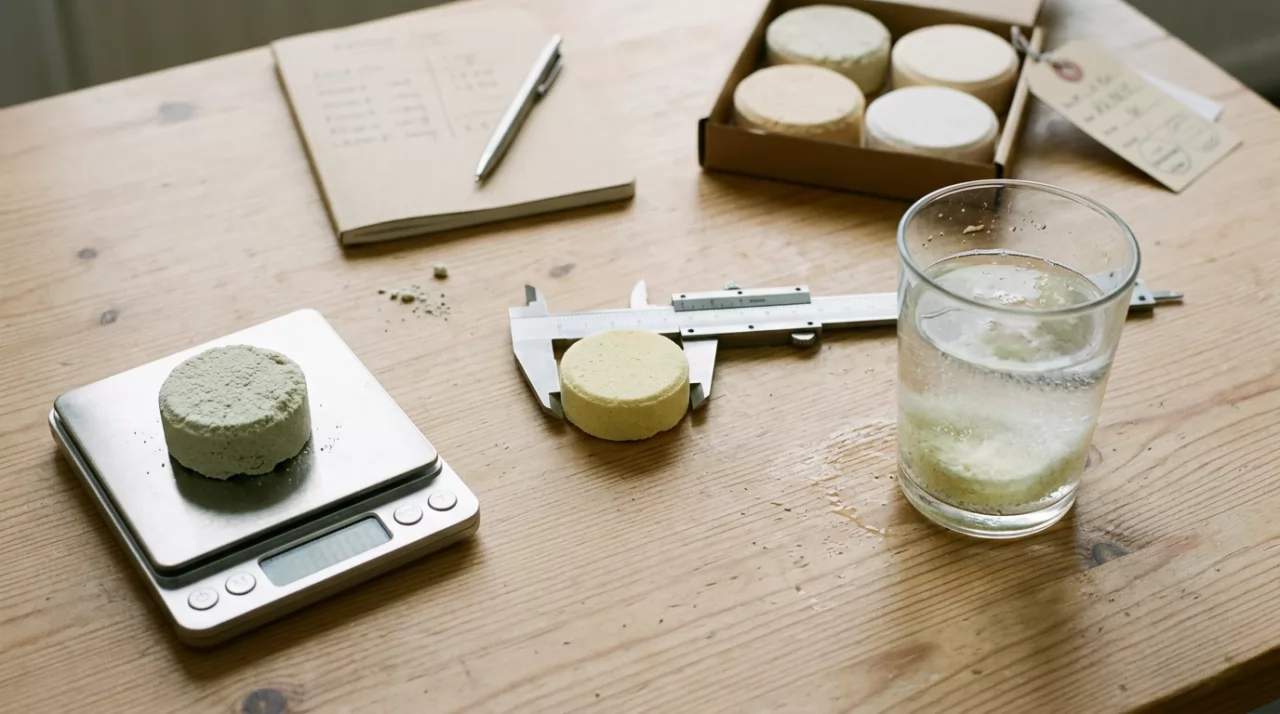
Pull three units from three different batches and set them side by side on a table. Weigh them, compare colour under the same light, drop each in a glass of water. Shower steamer batch consistency shows up in minutes this way, and since retailers and marketplaces now ask for cosmetic-style documentation and repeatable product, with GMP practice under ISO 22716 as the usual reference, it is worth knowing what you are looking for.
What a Consistent Batch Looks Like
A consistent shower steamer batch matches the approved sample in weight, size, colour, scent strength and fizz behaviour, within tolerances agreed in writing before production. Consistency does not mean identical to the gram. It means every difference stays inside limits you set and can check.
The five properties buyers actually compare
Weight comes first because it is the easiest to measure and the one a retailer will check. Dimensions follow: a tablet that is a millimetre thicker may not fit its blister or box. Colour drift is what shoppers notice on a shelf, especially when two cartons from different lots sit next to each other.
Fragrance intensity is harder. A tablet that smells weak when the carton opens becomes a review that says "no scent". Fizz is the last one: how fast the tablet breaks up, how long it keeps bubbling, whether it crumbles in the hand before it ever touches water.
Why "same formula" does not guarantee "same product"
A formula sheet lists ingredients and percentages. It says nothing about the room humidity on the day of mixing, how long the powder sat in the mixer, or how long the pressed tablets cured. Two runs of the identical formula can come out differently. The formula is where you start. Process control decides where you end up.
Where Variation Comes From
Work backwards from a bad batch and the cause is nearly always one of five things: the raw materials, the air in the room, the mixing, the pressing, or the curing.
Raw material lots and fragrance oils
Citric acid and sodium bicarbonate are the core of the fizz reaction. Different supplier lots can differ in particle size and residual moisture, and that changes how the powder blends and presses. Colourants vary in strength from lot to lot, so the same dosage may give a slightly different shade. Fragrance oils are the most sensitive: a reformulated or substituted oil can change both scent strength and how the mix behaves, because some oils add liquid and some interact with colourants.
Moisture, temperature and mixing
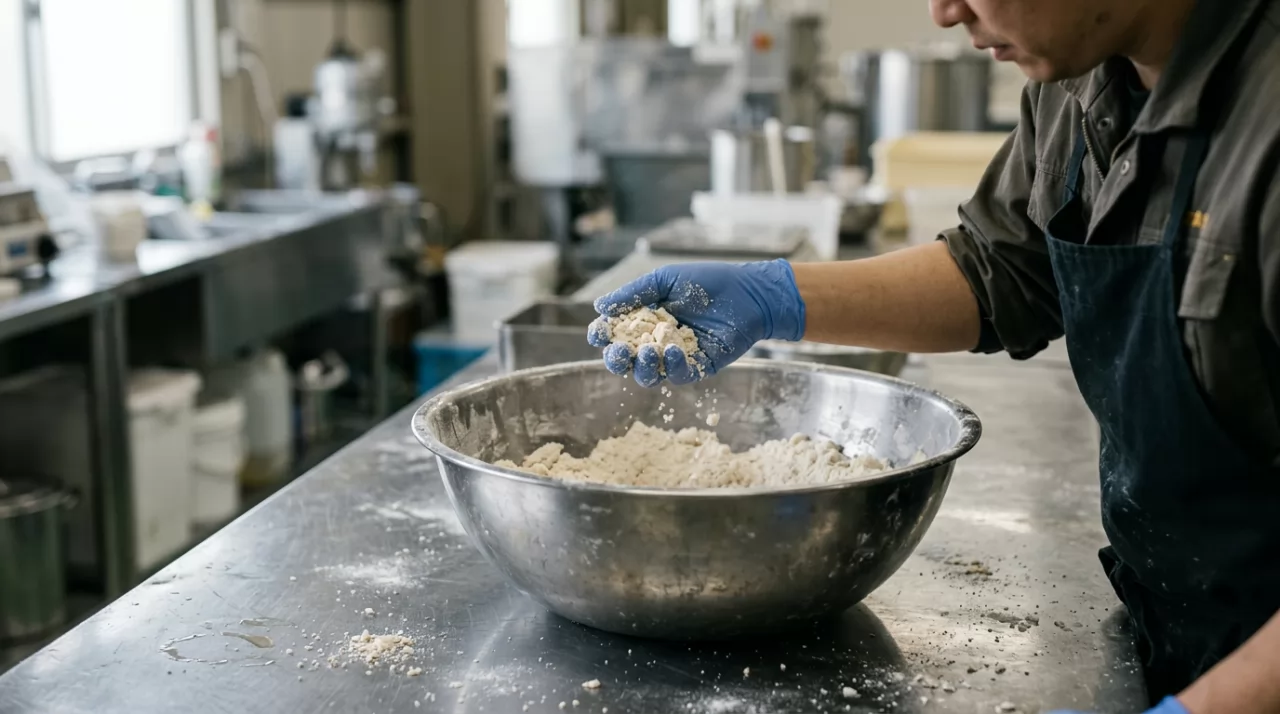
Shower steamers are pressed from a damp-ish powder, and small moisture changes matter. Too wet and tablets stick to the mould and may swell or crack while drying. Too dry and they crumble. Because the acid and bicarbonate start reacting when moisture is present, a mix that waits too long also loses some of its fizz before it is even pressed. Season matters too. A plant running the same recipe in humid summer and dry winter needs to adjust, and a supplier who never adjusts will show it in the product.
Pressing, demoulding and curing
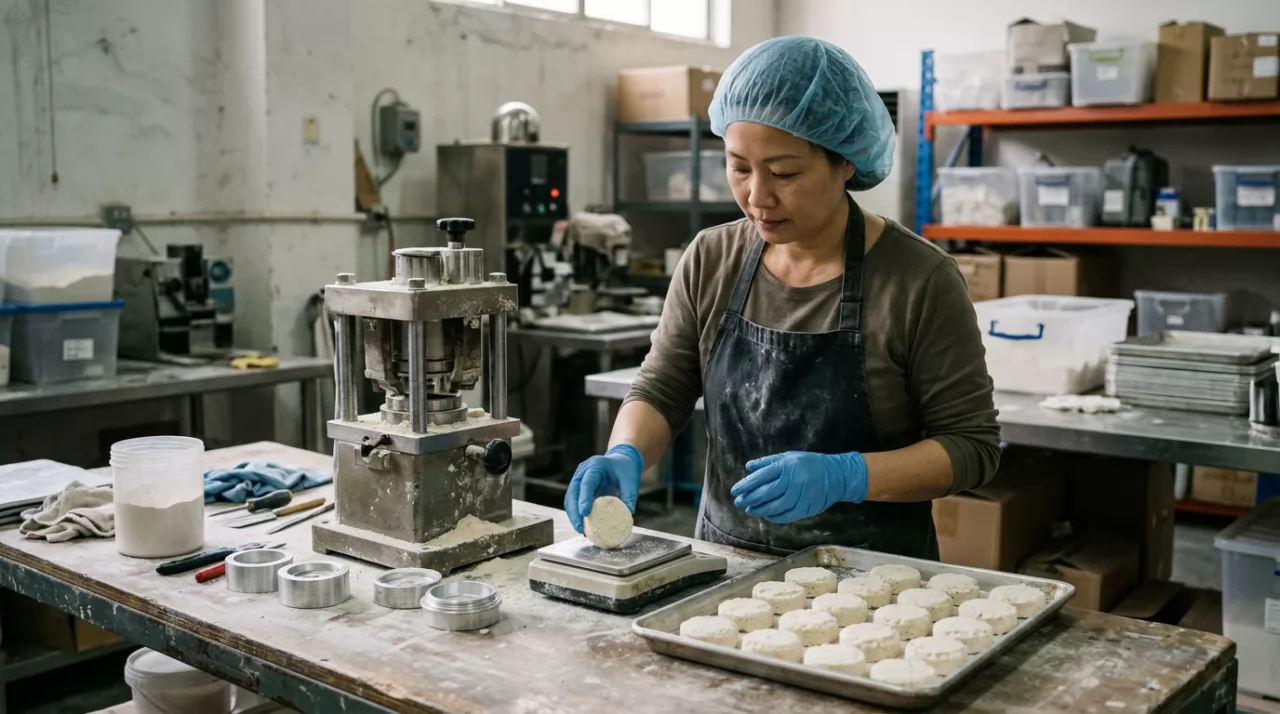
Press force sets density, which drives both weight and hardness. Mould wear changes tablet dimensions slowly over thousands of cycles, and cavities in the same multi-cavity mould do not always fill equally. Dwell time and the drying or curing period then decide how hard the tablet ends up. A tablet shipped before it has fully cured may be soft at the factory and fine later, or the reverse.
How Do Manufacturers Control Shower Steamer Quality?
Manufacturers control shower steamer quality by checking at fixed points in production order: material intake, mixing, pressing, curing and final packing. Each check produces a record tied to a batch number, so a problem can be traced back to a lot, a date and a line. Without the record, the check proves little.
- Verify incoming materials against specification and supplier documents, and log the lot numbers.
- Weigh each batch of ingredients and record it against the formula.
- Control moisture and mixing time, and check the mix before it goes to the press.
- Sample tablet weight at set intervals during each pressing run and adjust if it drifts.
- Check shape, cracks and colour visually after demoulding and again after curing.
- Inspect finished goods against a sampling plan, including packaging and labelling.
- Keep a reference sample from every batch before shipment.
Incoming material checks and lot records
Intake checks usually cover identity, appearance, odour for fragrance, and the supplier's certificate of analysis or specification sheet. Lot numbers go on the production record so that a complaint about one finished batch can be linked to the exact lots of citric acid, colourant and fragrance used. Retained samples of key materials help when a later lot behaves differently.
In-process checks at mixing and pressing
This is where most consistency is won. Batch weighing records show the formula was followed. Operators check the feel of the mix, and often moisture, before pressing starts. During the run, a sample of tablets is weighed at intervals, commonly every so often per press or per shift, and the interval should be written in the procedure. Visual checks catch cracked edges, chipped detail and colour streaks early, before thousands of units pile up.
Finished goods inspection and retained samples
Finished goods are normally inspected by sampling, often following an AQL-style plan (acceptable quality limit, a statistical sampling method for deciding whether a lot passes). Inspectors check weight, appearance, wrapping, labels, batch codes and carton marks. One or more units from each batch are then kept as a reference. If a customer questions quality six months later, that unit is the evidence.
Shower Steamer Quality Control Process: Stage-by-Stage Reference
The table puts the same controls in one view, with the record you can ask to see at each stage.
| Stage | What is checked | Record to ask for |
|---|---|---|
| Material intake | Identity, appearance, supplier specification | Lot log, supplier documents |
| Weighing | Quantities against formula | Batch weighing sheet |
| Mixing | Moisture feel, colour evenness, mixing time | Mixing record |
| Pressing | Tablet weight, shape, cracks | Sample weight log per run |
| Curing | Hardness, drying time, surface condition | Curing start and end times |
| Final inspection | Appearance, packaging, labels, batch code | Inspection report |
| Storage | Reference sample per batch | Retained sample register |
If a supplier cannot show at least the weighing sheet and the pressing weight log, the controls are probably informal.
Standards, Audits and Documents Worth Asking For
No single certificate guarantees consistent shower steamers. Standards and audits show that a system exists. Your own sample checks show whether it works. Treat documents as a way to ask better questions, not as the answer.
GMP and ISO 22716: what they cover
ISO 22716 is the international guideline for good manufacturing practice in cosmetics. It covers personnel, premises, equipment, raw materials, production, finished goods, quality control, documentation, internal audit, handling of deviations and complaints, and traceability. Its relevance here is change control and records: a formula or material change should be written down and approved, not made quietly on the floor. Ask whether the factory holds a certificate or follows the guideline informally, and ask to see the procedures either way.
Social audits and what the wording means
SMETA is an audit methodology used under Sedex, a platform for sharing supplier ethical data. A factory is "SMETA audited" and can be a "Sedex member"; neither is a product certificate, and neither says anything about fizz or fragrance. Third-party test reports, such as those from SGS, are different: they test specific samples for specific parameters, so check the report's date, the sample description and the tested items. On animal testing and vegan formulas, ask for documentation before repeating any claim on your pack. And a note on the FDA: facility registration, where it exists, is not an approval of the product.
Documents for your target market
In the EU and UK, cosmetics generally need a cosmetic product safety report, a responsible person established in the market, and notification of the product before sale. Ingredient labelling follows INCI names. In the US, cosmetics are regulated under the FD&C Act and the Modernization of Cosmetics Regulation Act (MoCRA), with labelling rules that include ingredient lists and a responsible person. Gulf markets often have their own labelling and registration requirements. Requirements change, so confirm current rules with a regulatory adviser for each market before you finalise artwork.
How to Check Shower Steamer Quality Before a Bulk Order
Check in three steps: approve a sample, write the tolerances down, then test the first bulk delivery against that sample. The checklist below covers both sides of the order.
Before ordering
- Approved sample weight, size and colour recorded with photos and measurements.
- Tolerances for weight, dimensions and colour agreed in writing.
- Batch coding method and retained sample policy confirmed.
When the goods arrive
- Weigh a sample of units and compare with the approved sample.
- Run a fizz test in water and a scent check against the reference.
- Inspect cartons and units for cracks, crumbling and damage after transit.
Sample versus bulk sample
A first sample is made by hand or on a small run, and it can look better than what the line will produce. The bulk sample, made on production equipment with production materials, is the real benchmark. Approve that one, record its weight and measurements, and attach acceptable ranges to it in the contract. A tolerance that exists only in conversation will not help in a dispute.
What to ask the supplier in writing
Ask for stated tolerances on weight, dimensions and colour. Ask how batches are coded, whether a reference sample is kept for each one, and how long. Ask to be told before any change in fragrance, colourant or key raw material. And ask whether you, or an agent you appoint, can inspect before shipment. Suppliers who run proper records answer these easily; vague replies tell you something too.
Your own incoming checks
You need a scale, a ruler or caliper, a clear glass and the approved sample. Weigh a spread of units from different cartons, not the top layer only. Compare colour in daylight. Drop one steamer in water next to a reference unit and watch the fizz and break-up. Smell both. Finally, drop a sealed carton from a modest height, as a rough transit test, and see what arrives cracked. If you plan to send your tolerances, target market and packaging idea to Boymay, the team can quote against them, and samples are free with freight paid by the buyer.
Order Stages and Where Consistency Is Locked In
Quality checkpoints sit inside the normal order process. The table shows where each one belongs.
| Order stage | Consistency checkpoint |
|---|---|
| Customization discussion | Formula, fragrance and tolerances defined |
| Sample and contract | Sample tested, tolerances written into contract |
| Bulk sample and packaging | Production-line sample becomes the benchmark |
| Mass production | In-process records and batch codes |
| Inspection and shipment | Final inspection before balance payment |
The bulk sample approval is the moment that matters most: after it, the benchmark is fixed.
Common Pitfalls and Trade-offs
Tolerances set too tight raise rejection rates and cost, and the supplier will price that in. Fragrance swaps without notice are a frequent cause of complaints, so make change notification a contract term. Seasonal humidity can shift results even with a good process, which is why a winter sample should not be your only reference. Inspection level is a cost decision as well: more sampling and a third-party check add expense but lower the risk on large or first-time orders.
FAQ
How much weight variation is acceptable between batches?
It depends on tablet size and the retailer's requirements. Agree a range on the approved bulk sample, then test against it.
Can colour and scent be matched exactly every time?
Not exactly. Colourant and fragrance lots vary slightly, so agree an acceptable colour difference against a reference sample and have the supplier retain one for each batch. Scent is judged by smell, which is subjective, so a side-by-side check with the reference is the practical method.
How do manufacturers control humidity during production?
Usually through controlled or monitored rooms, checking moisture of the mix, and adjusting the recipe or drying time by season. Ask what is recorded.
What should a batch record include?
At minimum: batch number, date, formula version, raw material lot numbers, weighing results, key process settings, in-process check results, inspector sign-off, and the reference sample location. If any of these are missing, traceability is weaker than it sounds.
Next Step
Send your target market, quantity, packaging idea and the weight and colour tolerances you need. That is enough for a quote and a sample plan. Samples are free; the buyer pays freight.


