

A tablet pressed this morning and sniffed at the line will almost always smell strong, so a factory that judges by that sniff and a factory that ages samples and re-checks them can hand you the same batch with very different odds. The gap shows up weeks later, on a shelf or in a warehouse. Shower steamer fragrance retention is something you can measure before an order ships, and this guide covers what causes the fade, which tests to request, and how to read the results.
What Actually Happens to Fragrance Inside a Pressed Tablet
Shower steamers lose scent because fragrance molecules are volatile: they evaporate from the surface, soak into the powder base, and migrate into the packaging. The lightest components go first, so the tablet usually changes character as well as getting weaker. How fast this happens depends on the fragrance, the base, moisture and the pack.
Top notes leave first
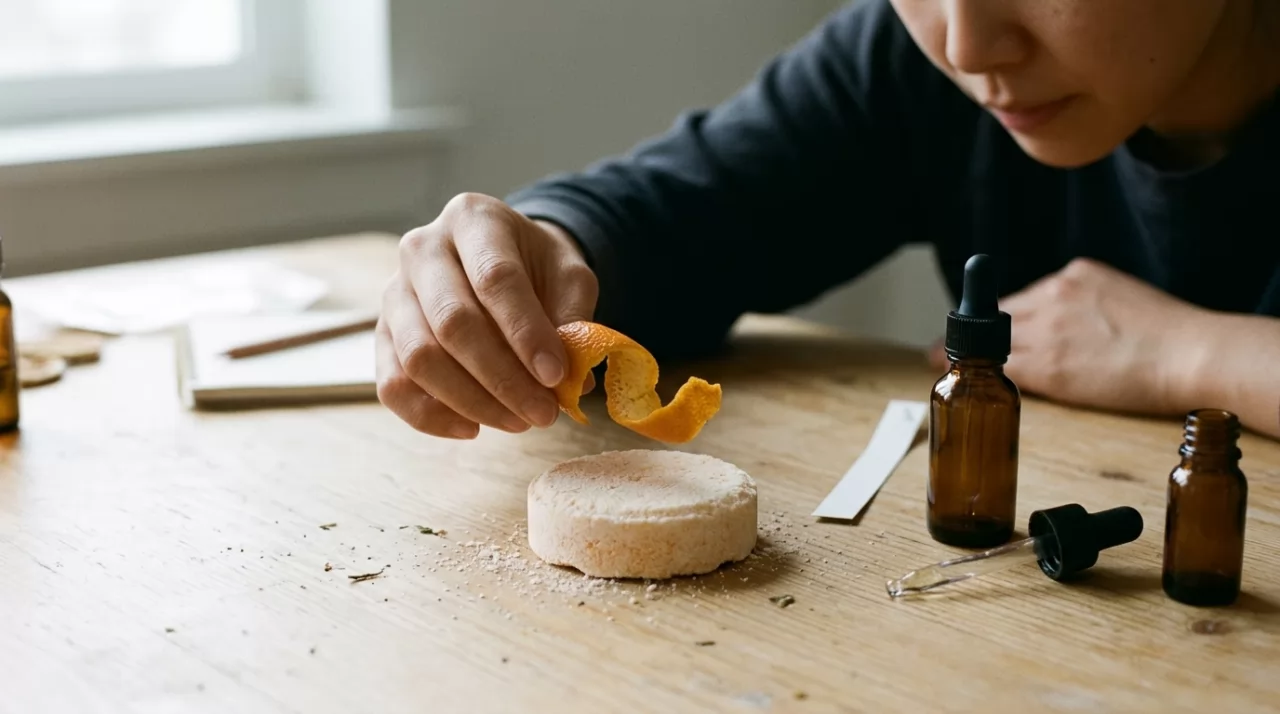
A fragrance is a blend of many aroma compounds with different evaporation rates. Citrus, fresh and some green notes sit at the light end. They are what a buyer smells first and what disappears first. After a few weeks the heavier woody, musky or sweet parts remain, and the tablet smells "darker" or flatter than the approved sample. A scent that "faded" is often a scent that rebalanced. That matters when you write acceptance criteria, because "still strong" and "still the same" are two separate questions.
The base is not neutral
A shower steamer is mostly sodium bicarbonate and citric acid, plus fillers and binders. Each of these has a different surface area and porosity, and each takes up and holds fragrance oil differently. Fine, dry powders can hold oil well. Moisture changes that. Even a small gain in water can start the acid-base reaction slowly, and the fizzing reaction itself pushes volatile compounds out of the tablet. A base that looked fine at pressing can behave differently two months later in a humid warehouse.
Is It the Formula, the Fragrance, or the Packaging?
Usually it is a combination, but one factor tends to dominate, and you can find it by changing one variable at a time. Test the same fragrance in two pack formats, or two fragrances in the same pack. Without that separation, a supplier can blame the pack while you blame the formula, and nobody fixes anything.
Fragrance type and oil load
Fragrance oils are blended aroma materials, often synthetic or part-synthetic. Essential oils are extracted from plants and vary by crop and distillation. Both are volatile, and neither is automatically the longer-lasting choice. The dosage, meaning the percentage of oil in the tablet, is the lever everyone reaches for. More oil can mean a stronger first impression, but too much leaves oily spots, causes sticking in the mould, weakens the pressed tablet and can react with the base. There is also a ceiling set by regulation and by the fragrance supplier's own usage guidance for each material. Dosage should be tuned by testing, not by instinct.
Moisture and reactivity
Moisture is the quiet cause of many complaints. A tablet that picks up water can begin to react, swell, crumble or develop a chalky surface. Scent often drops at the same time because the reaction drives off volatiles and the structure loosens. If you see cracking or a slightly puffed tablet alongside weak scent, look at moisture control in the base, the drying step and the seal before you touch the fragrance.
Pack format and seal
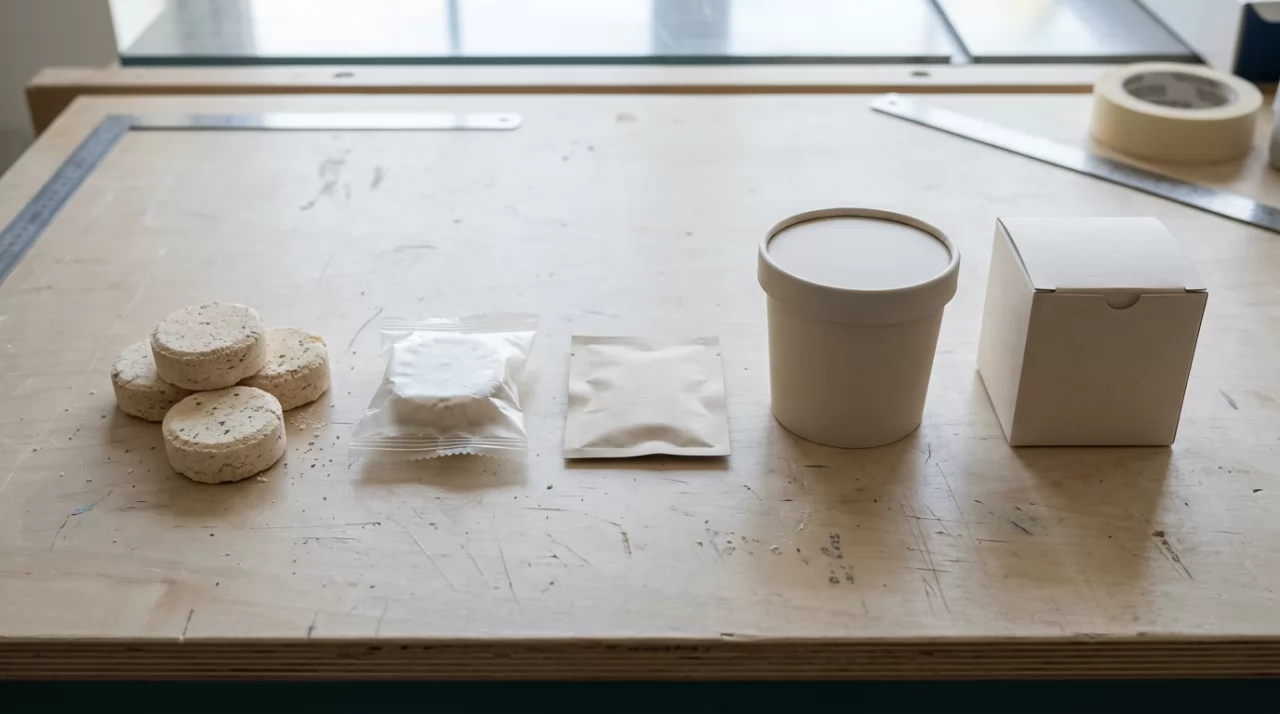
Flow wrap, sachets, tubs and cartons behave differently. A well-sealed film limits humidity and slows scent loss to the air. An open carton does neither. Some plastics and papers also absorb fragrance oils, so part of the scent ends up in the pack material rather than the tablet. The seal quality matters as much as the film choice: a weak seam on a few percent of units will not show in a small sample check but will show in the market.
Test Methods That Show Real Retention
Sniffing is not a test. A useful programme combines sensory checks with measurements, all run against a fixed protocol and a retained control. If you are asking how to test fragrance stability in shower steamers, these are the three layers to request.
Sensory panel with a fixed protocol
Smell is still the final judge, because customers buy with their noses. But it has to be done consistently. Use the same room, the same distance from nose to sample, the same scoring scale and the same people where possible. Score two things separately: the dry tablet (through the pack, and after opening) and the scent when it dissolves in warm water or steam, since that is what the user experiences. Always include a control, ideally the approved bulk sample kept sealed and cool, so the panel compares against a reference and not against memory. Scoring both intensity and character catches the "rebalanced" problem described earlier.
Accelerated and real-time ageing
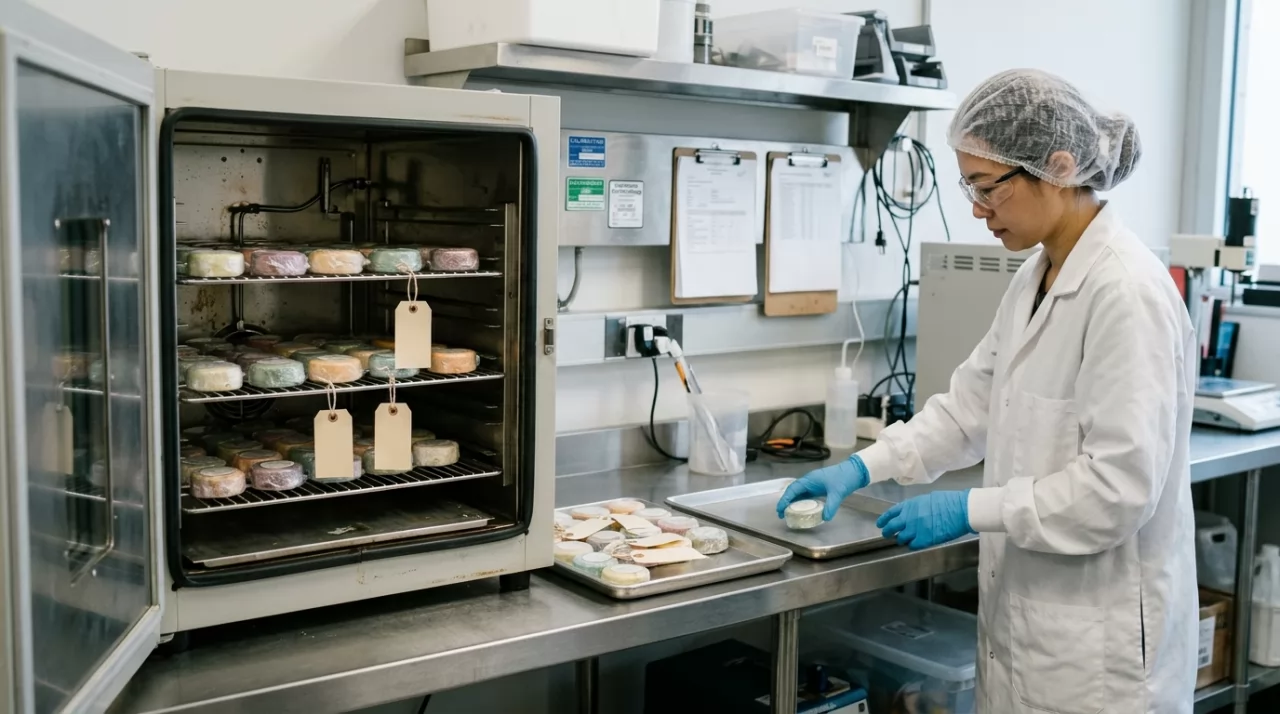
Accelerated ageing stores samples at elevated temperature, sometimes with humidity cycling, to speed up change. Real-time ageing stores them in ambient conditions in the final pack. Accelerated tests are quick and good at ranking options, such as which pack or dosage fades faster. They are poor at predicting an exact shelf life in months, because heat can change a fragrance in ways normal storage never would, and it can degrade the pack too. Typical practice is to use accelerated results as an early warning and real-time results as confirmation. Test durations and temperatures should be agreed with the manufacturer, who will have their own standard conditions.
Weight loss and analytical checks
The simplest measured check is mass. Weigh marked samples at set intervals. A steady weight loss in a sealed pack suggests volatiles are escaping, or moisture is changing. It will not tell you which compounds are gone, but it is cheap and repeatable. Where you need to know what is actually left, gas chromatography–mass spectrometry (GC-MS) is a lab method that separates and identifies volatile compounds, so you can compare the profile of an aged tablet against a fresh one. It costs more and needs a lab, so it is usually kept for disputes, new fragrance systems or high-volume lines.
Reading the Results: What Pass and Fail Look Like
Pass and fail only mean something if both sides agreed on the criteria before production. Typical criteria cover intensity compared with the control at each time point, a character match, and no visible defects such as oil spotting, swelling, cracking or pack distortion. Define how big a drop counts as a fail, and who decides when panel scores disagree. Write it into the order documents.
No single test answers every question, which is why they are combined.
| Test type | What it shows | Typical timing | Limitation |
|---|---|---|---|
| Sensory panel | What customers will notice | At each time point | Subjective, needs a protocol |
| Accelerated ageing | Relative ranking of options | Weeks | Cannot give exact months |
| Real-time ageing | Behaviour in normal storage | Months | Slow, results arrive late |
| Weight tracking | Volatile or moisture loss | Regular weighing | Does not identify compounds |
| GC-MS | Which compounds remain | Lab turnaround | Costly, needs interpretation |
For most orders, a sensory panel plus accelerated and real-time ageing gives enough evidence, with GC-MS held back for problems.

Shelf Life Testing for Shower Steamers: A Timeline Worth Agreeing Up Front
Shower steamer shelf life fragrance testing works best when it follows the order sequence instead of being added at the end. The checks below sit naturally between approval and shipment, and each one answers a different question.
| Stage | What to check | Purpose |
|---|---|---|
| Sample approval | Scent, colour, dissolve behaviour | Set the reference |
| Ageing of approved sample | Sealed and open packs, stored | Spot early fade |
| Bulk sample | Final pack, final dosage | Confirm production match |
| Production | Retain pulled from each batch | Create a traceable record |
| Pre-shipment inspection | Seal, weight, scent vs control | Catch defects before release |
| Post-shipment retain check | Retain re-scored at intervals | Compare with market feedback |
The point of the table is that ageing starts at sample approval, not after the goods are made.
Retain samples from every batch
Keeping a handful of sealed units from each batch, labelled with the batch number and stored in a known place, is the cheapest early warning you can build. When a customer says the scent was weak, you can open a retain from the same batch and compare it with the control. Without retains, every complaint becomes an argument. Agree how many units are kept, for how long, and who can access them.
Where the factory's own order stages fit
In Boymay's order process, bulk samples are made and approved before mass production starts, so that window is where ageing checks on the final pack belong. Once production begins, changing dosage or packaging is expensive and slow.
Mistakes and Myths That Cost Brands Money
"Just add more fragrance." This often backfires. Extra oil can make tablets oily, soft or difficult to press, and it may react with the base. It also raises the cost per unit and may exceed the fragrance supplier's recommended use level. Instead, test two or three dosages in the final pack and compare after ageing.
"Essential oils last longer." Many essential oils are rich in light, volatile components, and some fade quickly in a tablet. Some fragrance oils contain heavier fixative materials that hold better, but that depends on the specific blend. Compare your actual candidates, not categories.
"A strong smell in the box means a strong shower." A sealed box can build up headspace scent that makes the tablet seem powerful on opening. The experience that counts is dissolving in warm water, which releases fragrance differently. Score that step separately.
"Natural" scent claims. A product is not natural just because a plant extract is in the blend. Unless you can document the formula, avoid the word. It is easy to write and hard to defend.
Claims to keep off the label
Keep the label to what you can show: the scent description, the ingredients in INCI names and the usage instructions. Wording about therapy, relaxation as a medical benefit, detox or sleep is a regulatory risk in most markets. Words like "natural", "eco-friendly" or "biodegradable" need specific material evidence or certificates, so leave them out when you do not have the paperwork.
Briefing Your Manufacturer: A Practical Checklist
A good brief makes testing possible. Vague requests like "long-lasting scent" give a supplier nothing to measure against. Before you send an RFQ or sample brief, ask yourself:
- Have I stated the scent target in words, and named a reference product or approved sample?
- Do I know the fragrance dosage and have I asked for the fragrance supplier's allergen declaration and safety documents?
- Have I defined the pack format and seal, and asked that ageing be done in that exact pack?
- Have I agreed the storage conditions, test time points and who scores the samples?
- Have I set pass and fail criteria and a retain policy, including how many units are kept per batch?
- Do I have the documents my destination market requires, such as ingredient labelling and safety assessment records?
Regulatory expectations differ between the EU, the UK, North America and Gulf markets, so ask your compliance contact or importer what they need for your destination before the formula is locked.
Next Step
If you have a fragrance in mind, questions about how to set up its ageing plan are welcome, and it helps to include the pack format, the destination market and the dosage range you are considering.
Questions Buyers Ask About Scent Fade
How long should a shower steamer keep its scent?
It depends on the fragrance, the base and the pack, so there is no single number. Agree a target with your supplier and test against it in the final pack.
Can I add more fragrance oil to fix fade?
Sometimes a small increase helps, but too much causes oiliness, weak pressing and possible reactions with the base. Test several dosages through ageing instead of guessing.
Do essential oils hold up worse than fragrance oils?
Often they fade faster, because many contain highly volatile components, but it varies by oil and by blend. Compare your actual candidates side by side.
What should I ask for in a test report?
Ask for the method, the time points, storage conditions, the control sample used, the pack format and the batch number. Without those, a "pass" tells you very little.


