
El champú sólido ha pasado de ser un producto de nicho en estantes ecológicos a formar parte del cuidado capilar convencional, y la conversación más destacada en este momento gira en torno a una pregunta: ¿puede una pastilla ayudar realmente al crecimiento del cabello? La respuesta breve es matizada. La fórmula adecuada no hará brotar nuevos folículos, pero puede proteger los que ya tiene y reducir la rotura que hace que el cabello parezca fino.
Esta selección reúne las pastillas que merecen su inversión y va un paso más allá. Analizaremos en qué aspectos incluso las opciones populares se quedan cortas, porque comprender esas brechas es la forma de elegir algo que realmente funcione — y de desarrollar mejores productos.
Por qué las pastillas de champú están ganando protagonismo en la conversación sobre el crecimiento del cabello
Los compradores preocupados por la caída y el afinamiento del cabello recurren cada vez más a formatos sólidos. En parte, se debe a la sostenibilidad. Pero en mayor medida, responde a la creciente conciencia de que muchos champús líquidos despojan al cuero cabelludo de sus aceites naturales y debilitan la fibra capilar con el tiempo.
El auge del champú sólido sin sulfatos
Los sulfatos como SLS y SLES son tensioactivos agresivos. Generan una espuma excelente, pero también alteran la barrera lipídica del cuero cabelludo y pueden dejar la cutícula levantada y propensa a quebrarse.
Un champú sólido sin sulfatos bien formulado los sustituye por limpiadores más suaves — como sodium cocoyl isethionate (SCI) o sodium coco-sulfate combinado para una mayor suavidad. El resultado es una limpieza que respeta el manto ácido, de modo que hay menos rotura mecánica que se confunde con caída.
Qué significa realmente "crecimiento del cabello" en una pastilla de champú
Esta es la explicación honesta que la mayoría de las marcas omiten. El cabello crece desde el folículo aproximadamente de 1 a 1.5 cm al mes, y ningún producto de enjuague cambia esa biología en segundos de contacto.
Lo que hace una buena pastilla es crear un entorno más saludable para el cuero cabelludo, mejorar la circulación local con activos estimulantes y reducir la rotura para conservar la longitud. Esa combinación se percibe como "cabello más abundante y de crecimiento más rápido" — aunque el mecanismo sea la retención y la salud del cuero cabelludo, no una división celular acelerada.
Ingredientes clave que realmente favorecen el crecimiento del cabello
Las listas de ingredientes dicen más que las promesas de marketing. Estos son los ingredientes estimulantes del crecimiento capilar que vale la pena buscar, y los que conviene evitar.
Biotina, cafeína y estimulantes del cuero cabelludo
Los beneficios de las barras de champú con biotina suelen exagerarse en lo que respecta a la absorción tópica, pero la biotina sigue contribuyendo a la estructura de la queratina y combina bien con un perfil nutricional más amplio. La cafeína cuenta con evidencia más directa — los estudios sugieren que puede contrarrestar el efecto supresor de la testosterona sobre los folículos durante el contacto con el cuero cabelludo.
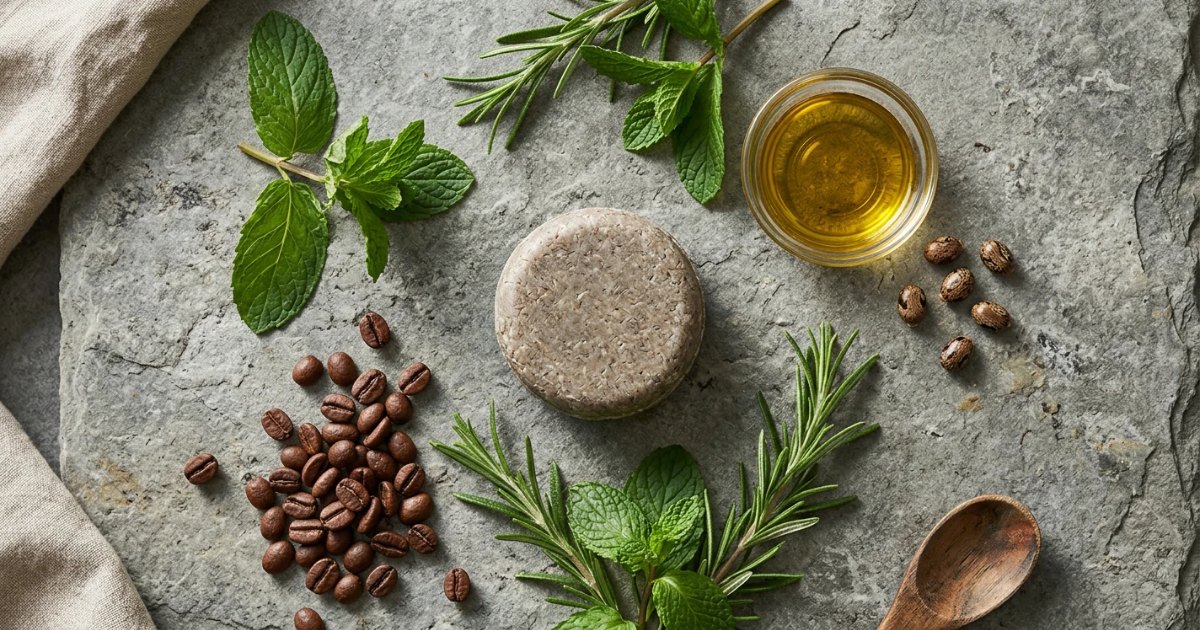
El aceite de romero es el botánico más destacado. Una comparación clínica de 2015 determinó que tuvo un rendimiento comparable al minoxidil al 2% durante seis meses para la alopecia androgenética — por eso ahora aparece en fórmulas serias enfocadas en el crecimiento. El aceite de menta aporta una estimulación refrescante que favorece la circulación.
Aceites y botánicos nutritivos
El aceite de argán (argania) aporta vitamina E y ácidos grasos que suavizan la cutícula. El aceite de ricino, rico en ácido ricinoleico, es un favorito de larga trayectoria para recubrir y fortalecer las hebras frágiles. El aceite de coco es uno de los pocos aceites con eficacia demostrada para penetrar en la fibra capilar y reducir la pérdida de proteínas durante el lavado.
Ingredientes que conviene evitar
Evite los sulfatos agresivos, las altas concentraciones de cloruro de sodio utilizadas como endurecedor económico y las cargas elevadas de fragancias sintéticas que irritan los cueros cabelludos sensibles. Los alcoholes resecantes en los primeros puestos de la lista de ingredientes son otra señal de alerta para quienes ya lidian con la caída del cabello.
Las mejores barras de champú para ayudar al crecimiento del cabello
A continuación, presentamos una selección práctica de barras de champú naturales para el crecimiento del cabello, agrupadas según lo que mejor hace cada una. Las valoraciones reflejan comentarios agregados de usuarios y la calidad de la formulación, más que una única prueba de laboratorio.
Tabla comparativa: las mejores barras de champú de un vistazo
| Categoría de producto | Ingrediente clave para el crecimiento | Ideal para | Sin sulfatos | Rango de precios | Calificación |
|---|---|---|---|---|---|
| Barra para el crecimiento general | Romero + cafeína | Todo tipo de cabello | Sí | $12–$16 | 4.6 / 5 |
| Barra enfocada en biotina | Biotina + aceite de ricino | Hebras débiles y quebradizas | Sí | $10–$15 | 4.4 / 5 |
| Barra para cabello debilitado | Cafeína + saw palmetto | Debilitamiento visible | Sí | $14–$20 | 4.5 / 5 |
| Champú en barra económico | Limpiadores derivados del coco | Buscadores de valor | Sí | $6–$9 | 4.1 / 5 |
Mejor barra en general para favorecer el crecimiento
Las opciones más completas equilibran un sistema de limpieza suave basado en SCI con romero y cafeína en concentraciones significativas. Hacen espuma sin resecar en exceso y se enjuagan limpiamente — la acumulación de residuos es un irritante común del cuero cabelludo, por lo que esto importa. Esta es la categoría por la que la mayoría de las personas debería empezar.
Mejor barra de champú con biotina
Si su preocupación es la rotura y las puntas abiertas, más que la caída desde la raíz, una barra con biotina combinada con aceite de ricino es la opción práctica. La biotina ayuda a la queratina, mientras que los aceites recubren y protegen el tallo capilar, de modo que el largo se mantiene en lugar de quebrarse a mitad de la hebra.
Mejores barras de champú para cabello debilitado
Para quienes buscan la mejor barra de champú para la caída del cabello en mujeres, lo más recomendable suele ser buscar cafeína combinada con botánicos bloqueadores de DHT, como la palma enana americana. Estos ingredientes actúan sobre la vía hormonal relacionada con el debilitamiento de patrón femenino, manteniendo al mismo tiempo una fórmula lo suficientemente suave para el uso diario.
Mejor champú en barra económico tipo jabón
Un buen champú en barra tipo jabón con buena relación calidad-precio no tendrá activos premium, pero aun así debe ser verdaderamente libre de sulfatos y adecuado para el pH. La compensación es tener menos ingredientes orientados al crecimiento, no volver a limpiadores agresivos. Cualquier opción por debajo de $9 que mantenga una fórmula suave y respetuosa con el cuero cabelludo está cumpliendo su función.
Lo que los mejores productos de champú en barra aún hacen mal
Incluso las barras mejor valoradas presentan fallos recurrentes. Señalarlos es precisamente el objetivo, porque estas brechas son exactamente lo que un producto de mayor calidad debería resolver.
Deficiencias en la formulación y resultados inconsistentes
El mayor problema es la concentración de activos. Muchas barras incluyen romero o cafeína casi al final de la lista de ingredientes, lo que significa que hay muy poca cantidad para marcar una diferencia. El pH es otro error frecuente. Las barras verdaderamente basadas en jabón suelen situarse en un pH de 8–10, lo que vuelve áspera la cutícula, mientras que una barra syndet correctamente tamponada se acerca más al ideal del cuero cabelludo de 4.5–5.5.
Envase, durabilidad y experiencia de uso
Las barras que se desmoronan, se vuelven blandas en una jabonera húmeda o se disuelven en tres semanas frustran a quienes hacen el cambio por primera vez. Las instrucciones de uso poco claras lo empeoran, ya que la técnica influye en la espuma y en los resultados. Estos son problemas de fabricación y formulación, no problemas del usuario.
La oportunidad para productos de mayor calidad
La demanda de champú sólido sigue aumentando, pero la oferta se inclina hacia productos con formulaciones insuficientes. Esa brecha representa una verdadera oportunidad. Las marcas que invierten en barras estables, con alta concentración de activos, pH correcto y perfiles de dureza duraderos pueden superar a los productos actuales en estantería y responder a un mercado que está listo para algo mejor.
Cómo elegir la barra de champú adecuada para su cabello
Adaptar la barra a su cabello y cuero cabelludo es mejor que perseguir la calificación más alta. Use la guía a continuación como filtro inicial.
Adapte la barra a su tipo de cabello y cuero cabelludo
| Problema capilar | Ingredientes recomendados | Tipo de barra |
|---|---|---|
| Caída / afinamiento | Cafeína, romero, saw palmetto | Syndet, pH equilibrado |
| Hebras quebradizas y con rotura | Biotina, aceite de ricino, argán | Barra acondicionadora |
| Cuero cabelludo graso | Menta piperita, árbol de té, aceites ligeros | Barra purificante |
| Cuero cabelludo seco / sensible | Aceite de coco, aloe, fragancia mínima | Syndet suave |
Cómo usar y conservar para obtener los mejores resultados
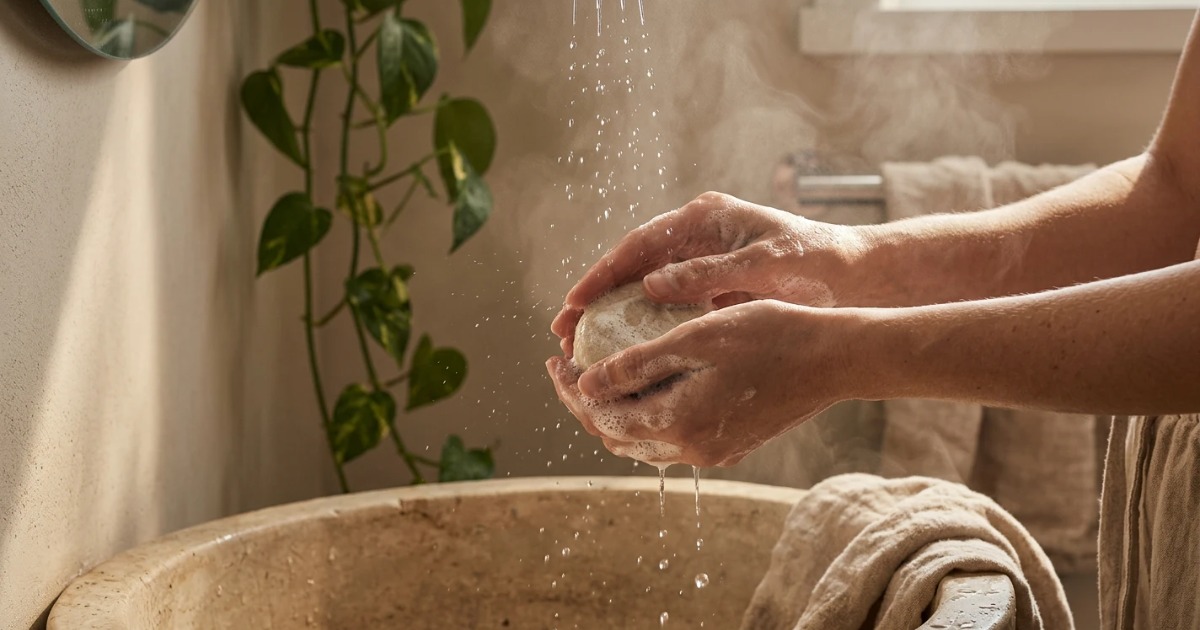
Humedezca la pastilla y su cabello; luego frote la pastilla directamente sobre el cuero cabelludo o frótela primero entre las palmas de las manos. Masajee la espuma durante 30 a 60 segundos para permitir que los estimulantes actúen y, a continuación, enjuague por completo.
Guárdela en una jabonera con drenaje, alejada del chorro de la ducha. Dejar que se seque entre usos es el factor más importante para prolongar la duración de una pastilla.
Desarrollar una mejor pastilla de champú: colabore con un fabricante de confianza
Si usted es una marca que lee esto y reconoce las mismas carencias que hemos descrito, la solución se encuentra a nivel de fabricación. La estabilidad de la formulación, la dosificación de activos y una dureza constante son disciplinas de producción, no aspectos secundarios.
Por qué la calidad de fabricación define el rendimiento del producto
El rendimiento real de una pastilla se determina mucho antes de que llegue al estante. Las concentraciones precisas de activos, el pH controlado y un prensado reproducible determinan si una fórmula genera buena espuma, mantiene su forma y ofrece los resultados que promete la etiqueta. Esa consistencia proviene del control de procesos y de la experiencia en cuidado personal sólido.
Capacidades OEM/ODM de Boymay
Boymay se ha especializado en la fabricación de productos sólidos y de cuidado personal desde 1995, con una sólida trayectoria en bombas de baño, tabletas aromáticas para ducha y formatos relacionados que comparten la ciencia de prensado y formulación detrás de las pastillas de champú de calidad. La operación se desarrolla en una instalación de 40,000㎡ con 16 líneas de producción automatizadas y un equipo de más de 200 personas.
La calidad está respaldada por certificaciones GMP, ISO, FDA y SMETA, con una capacidad de producción diaria de hasta 160,000 sets. Los MOQ comienzan en 1,000 unidades, lo que hace que los lanzamientos personalizados sean accesibles tanto para marcas emergentes como para minoristas consolidados en Norteamérica, Europa y Oriente Medio.
Tabla: Por qué las marcas eligen Boymay
| Capacidad | Detalle | Beneficio para su marca |
|---|---|---|
| Experiencia | OEM/ODM desde 1995 | Experiencia comprobada en formulación y prensado |
| Escala | 40,000㎡, 16 líneas, 160,000 sets/día | Capacidad confiable a medida que crece |
| Cumplimiento | GMP, ISO, FDA, SMETA | Entrada al mercado y auditorías más fluidas |
| Flexibilidad | MOQ desde 1,000, alta personalización | Lanzamientos de bajo riesgo, productos distintivos |
| Fiabilidad | Plazos de entrega estables | Reposiciones y planificación predecibles |
Si desea un socio de fabricación que trate la calidad de la formulación como el producto, no como una línea de coste, esa es la conversación que merece la pena iniciar.
Preguntas frecuentes
P: ¿Las barras de champú realmente ayudan a que el cabello crezca más rápido?
R: No directamente. Una barra de calidad favorece un cuero cabelludo más saludable y reduce la rotura, lo que ayuda a conservar la longitud y a ver un cabello con más volumen. Los activos estimulantes como la cafeína y el romero pueden favorecer el entorno del folículo, pero la velocidad de crecimiento en sí está determinada por la biología.
P: ¿Los champús sólidos sin sulfatos son mejores para la caída del cabello?
R: Por lo general, sí. Las fórmulas sin sulfatos son más suaves para la barrera del cuero cabelludo y la cutícula del cabello, por lo que causan menos rotura mecánica. Para cualquier persona que ya esté lidiando con la caída, esa reducción del daño evitable es importante.
P: ¿Cuál es la mejor barra de champú para la caída del cabello en mujeres?
R: Busque una barra con pH equilibrado, sin sulfatos, con cafeína y un ingrediente botánico bloqueador de DHT, como el saw palmetto, ya que el adelgazamiento de patrón femenino suele tener un componente hormonal. La posición de los ingredientes en la etiqueta indica si esos activos están presentes en cantidades significativas.
P: ¿Cuánto dura una barra de champú?
R: Una barra bien elaborada suele durar entre 50 y 80 lavados, a menudo el equivalente a dos o tres botellas de producto líquido. Su duración depende del almacenamiento. Manténgala seca entre usos y podrá duplicar su vida útil.
P: ¿Puedo crear mi propia línea de barras de champú de marca privada?
R: Sí. Con fabricación OEM/ODM, MOQs a partir de 1,000 unidades y personalización completa, Boymay puede ayudarle a desarrollar una barra de marca privada desde la fórmula hasta el producto terminado. Es una forma práctica de lanzar una opción de mayor calidad en un mercado que ya está preparado para ello.